Key Takeaways
-
Downhill hiking places significantly more load on the knee joint than flat or uphill walking.
-
Compression-based knee support may help improve joint position sense and stability on the trail.
-
The right hiking knee brace combines support, flexibility, and a fit that holds up over long distances.
Hiking downhill puts far more stress on the knees than most people realize. Understanding the science behind that stress, and choosing the right knee brace, can help you stay supported through every mile of the trail.
Why Downhill Hiking Puts Extra Strain on the Knees
Downhill hiking generates significantly higher forces on the knee joint than walking on flat ground or heading uphill. Research from Clinical Biomechanics found that walking downhill on an 11-degree decline increased peak ground reaction forces by 38%, peak knee flexion moments by 117%, and peak knee power by 490% compared to level walking.
Separate research from Schwameder and colleagues found that patellofemoral compression force, the force behind the kneecap, was more than five times greater during downhill walking at a 24-degree decline compared to walking on flat terrain. This means the steeper the descent, the harder your knees work to control and stabilize each step.
How Knee Braces May Help Support Stability on the Trail
Research suggests that the added support and compression from knee braces may help support joint position sense , which plays a role in helping hikers stay balanced on uneven or steep terrain.
Proprioception becomes especially important on unpredictable trail surfaces. For instance, loose rocks, exposed roots, and steep switchbacks all demand quick joint stabilization, often without much time to react.
Compression helps support healthy blood flow to the muscles surrounding the knee, which can be useful during long stretches on the trail.
Key Features To Look for in a Hiking Knee Brace
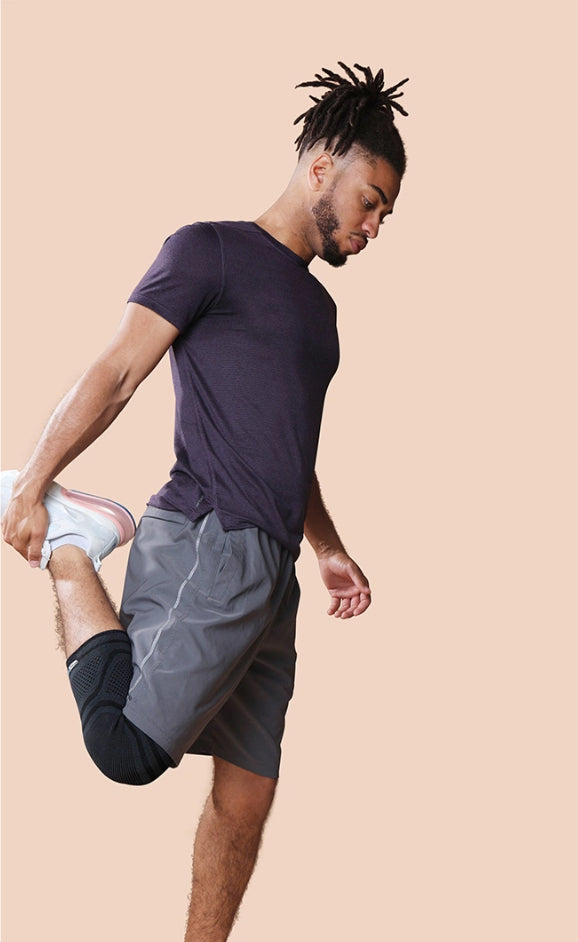
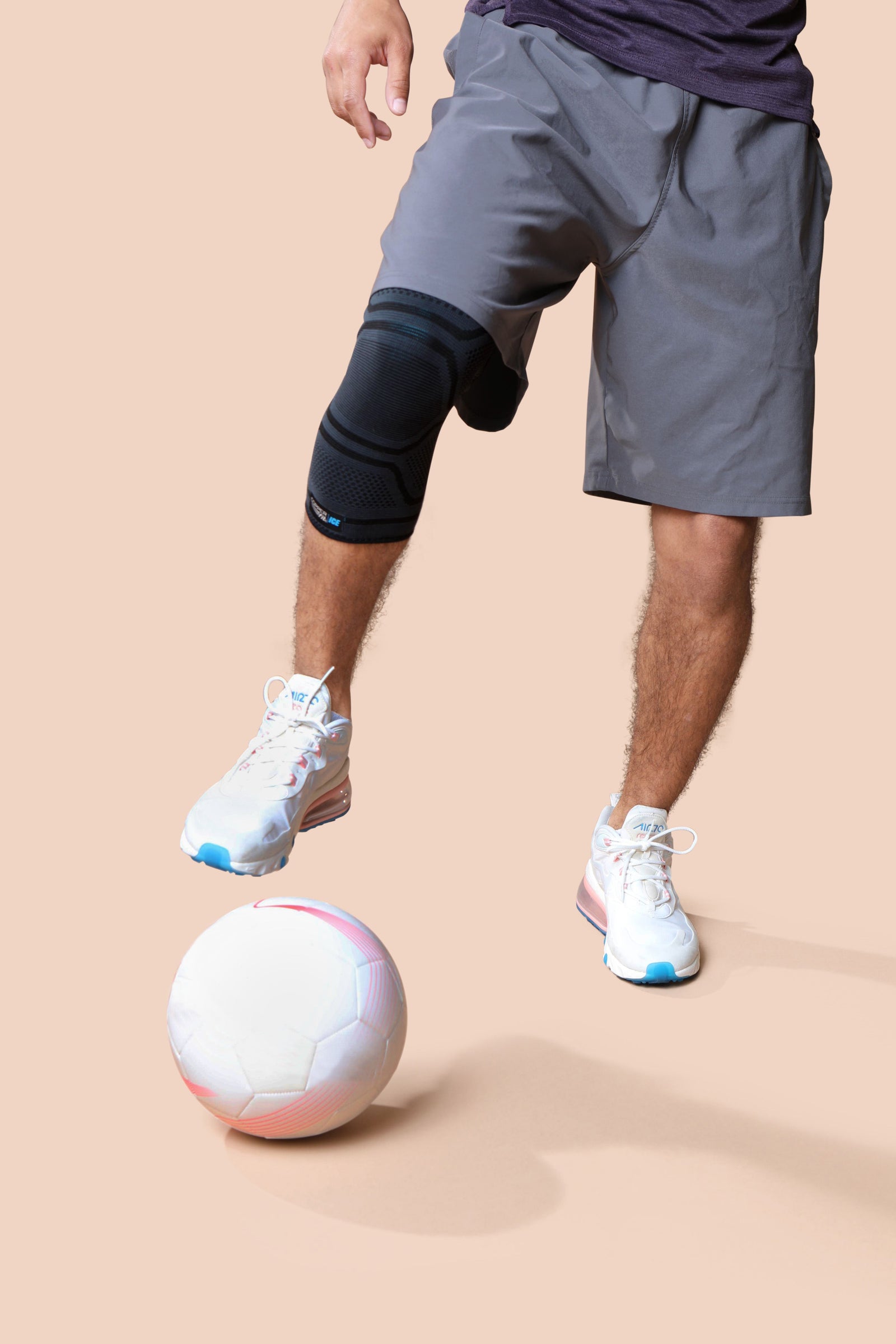
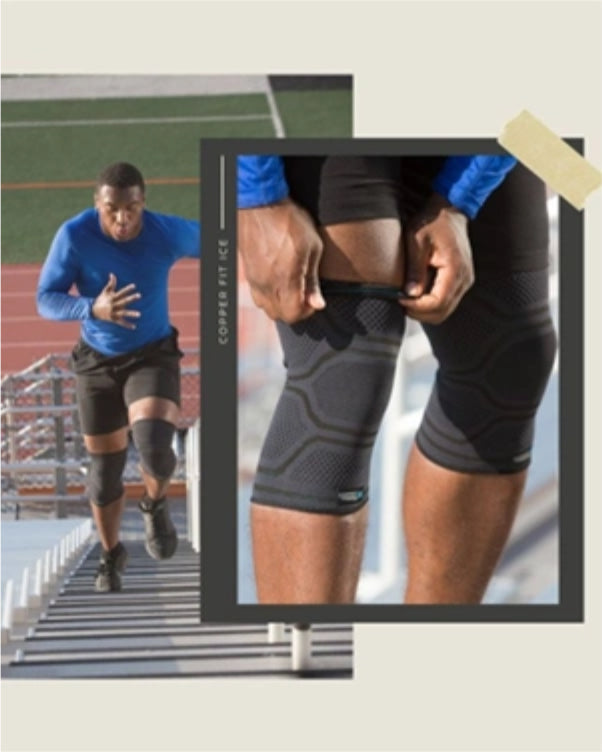
The best hiking knee braces combine compression, flexible support, and a fit designed for long days on the trail.
Look for these features:
-
Maximum support compression to help encourage circulation and support recovery after long hikes
-
A seamless, anti-chafing knit for unrestricted movement over variable terrain
-
Moisture-wicking fabric to help manage sweat on long treks
-
Copper-infused material to help reduce odor on multi-day trips
Frequently Asked Questions
Do I need a knee brace for hiking if I don't have an injury?
Many hikers wear a knee brace proactively to help support the joint, especially on steep or uneven terrain.
Does a knee brace help more when going uphill or downhill?
Research shows that downhill hiking places significantly more load on the knee joint, so support is often most beneficial during descents.
Can a knee brace improve balance on the trail?
Some research suggests knee supports may help with joint position sense, which can support stability on uneven terrain.
Will a knee brace help with odor on multi-day hikes?
Yes, copper-infused fabric is designed to help reduce odor with extended wear.
The Bottom Line
Here at Copper Fit , we know that the toughest part of any hike often isn't the climb up, it's the descent. That's why our knee braces and sleeves are designed with Maximum Support Compression, seamless anti-chafing knit, moisture-wicking fabric, and copper-infused material to help reduce odor along the way.
In short, whether you're tackling your first trail or your fiftieth summit, the right knee brace helps you feel supported from the trailhead to the descent and every step in between.
Sources:
Kinematic and kinetic comparison of downhill and level walking | ScienceDirect
Knee joint forces in uphill, downhill and level walking | ResearchGate
Impact of Leg Compression on Arterial and Skin Blood Flow: A Scoping Review | PMC