Key Takeaways
-
Sitting for long stretches keeps the calf muscles inactive, which slows the natural pump action that normally helps move blood back up the legs.
-
Most sedentary desk workers do well with mild graduated compression, generally in the 15–20 mmHg range, rather than the firmer levels used under medical guidance.
-
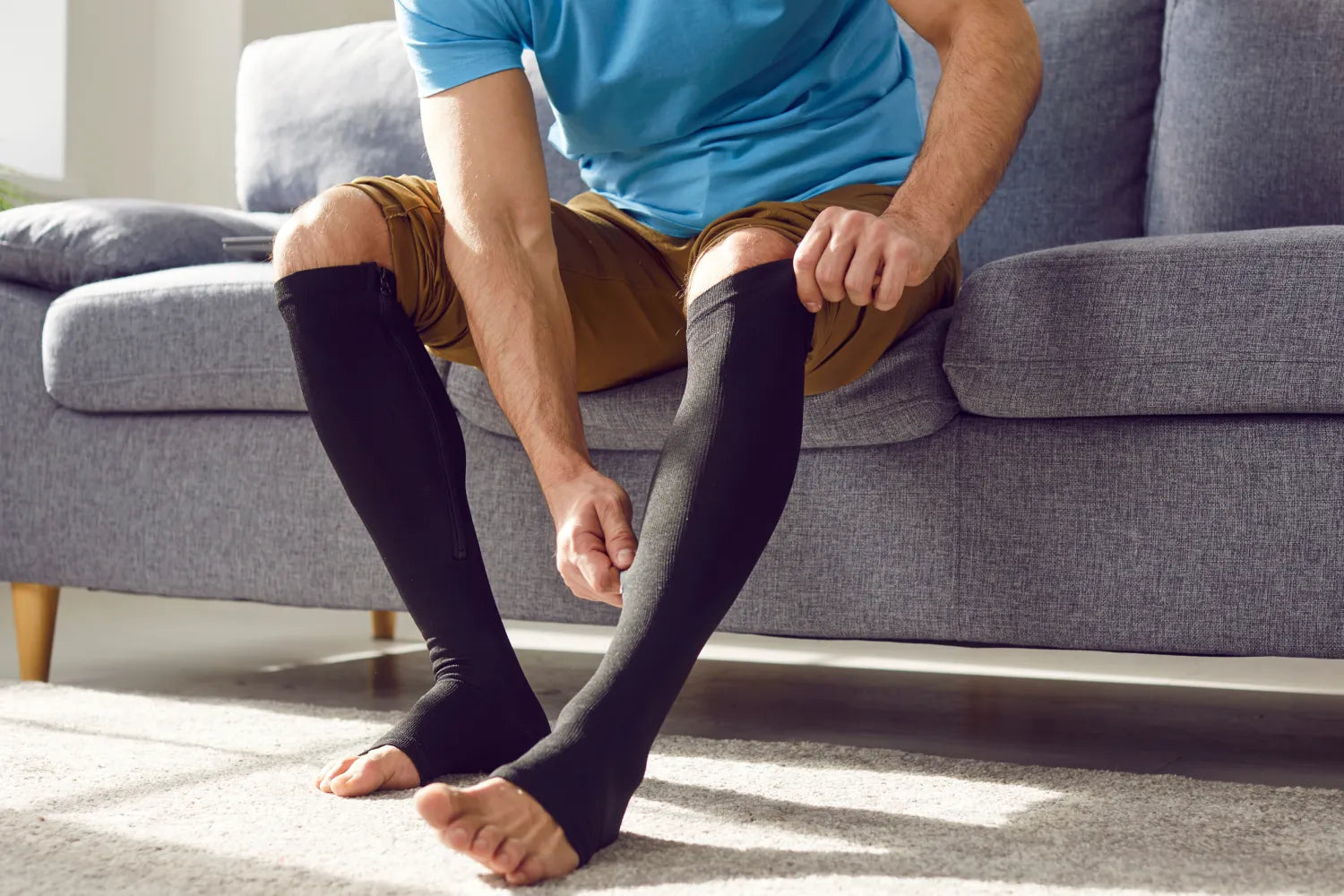
Putting compression socks on first thing in the morning, before any swelling builds up, makes them noticeably more effective than waiting until legs already feel heavy.
When we’re sitting at a desk rather than up on our feet, it’s easy to assume our legs are getting a break. In reality, sitting still for long stretches can be tougher on circulation than many people expect.
This is a different problem than what you may experience at a job that keeps you on your feet. Standing jobs involve constant weight-bearing and gravity pulling blood downward, while sitting jobs involve muscles that barely move for hours at a time. Understanding that difference matters because it changes what kind of compression sock actually helps.
This guide breaks down why sitting affects circulation, what compression level actually makes sense for a desk job, when to put your socks on for the best results, and a few solid picks to consider for your workday.
Why Sitting All Day Kills Circulation
Every time you take a step, your calf muscles contract, squeezing the veins running through your lower leg. That squeezing action pushes blood back up toward the heart, working against gravity. Researchers call this the calf muscle pump, and it plays a major role in venous return from the legs, especially during movement.
When you sit down for hours, that pump barely activates. The calf muscles stay relaxed instead of contracting and releasing, so blood has far less help moving upward.
On top of that, sitting with hips and knees bent at roughly 90 degrees can increase pressure behind the knees and thighs, which can further slow blood flow in that area. Research has found that when calf muscles are not contracting for extended periods, whether sitting or standing still, blood can pool in the veins and muscles of the lower leg.
Over the course of a full workday, this adds up. Legs and feet can start to feel heavy, tight, or swollen by the time you close your laptop.
The Right mmHg for Sedentary Desk Workers
When it comes to compression, mmHg refers to millimeters of mercury and is the unit used to measure the pressure a compression sock applies. Graduated compression socks are designed to apply the most pressure at the ankle and gradually less as they move up the leg, which is intended to help support blood flow in the right direction.
Compression levels generally break down like this:
-
8 to 15 mmHg (mild):A gentle level often used for everyday comfort and light support during travel or long periods of sitting or standing.
-
15 to 20 mmHg (moderate): Frequently described as the standard over-the-counter starting point for long flights, desk jobs, and general daily wear.
-
20 mmHg and above: Firmer levels are typically used under a healthcare provider's guidance for more specific needs.
For most people who sit at a desk all day, the moderate 15–20 mmHg range is the sweet spot. It offers noticeably more structure than the mildest socks without moving into territory that should involve a conversation with a doctor first.
This range appears repeatedly in compression sock guides as the go-to option for office workers, travelers, and anyone who spends long stretches sitting or standing.
When To Put Compression Socks On
Timing makes a real difference in how effective compression socks feel by the end of the day. The best approach is to put them on first thing in the morning, before you have been sitting for hours and before any tension or heaviness has had a chance to build up. Compression works best when it supports circulation from the start, rather than trying to catch up after your legs already feel tired.
If you know you have a day packed with back-to-back meetings, a long commute, or travel on top of your desk work, plan to wear your socks from the start of your morning routine through the end of the workday. For anyone who travels frequently for work, keeping a pair with your travel bag makes it easy to stay consistent.
At the end of the day, take a moment to remove your socks and, if you have the space, prop your feet up for a few minutes. It is a small habit that pairs well with the support compression socks already provide.
Comfort matters just as much as timing. A pair that is breathable and moisture-wicking is far more realistic to wear for a full eight- or nine-hour day than something stiff or overly warm, which is where fabric and construction come into play when picking a pair.
Best Compression Socks for Sitting All Day
Here are three solid options depending on how your workday is structured.
Mobilizer Compression Socks
If your days involve long meeting blocks, frequent travel, or a mix of desk time and time on your feet, our Mobilizer Compression Socks can provide the all-day support you’re looking for.
They are built with graduated compression and a breathable, moisture-wicking knit designed for all-day wear, plus a cushioned footbed for added comfort, whether you are under a desk or on the move between meetings.
Energy Compression Socks
For hybrid or in-office workers who want graduated compression without sacrificing style, the multicolor compression socks offer an easy-on and easy-off design that fits well into a fast morning routine. The cushioned footbed adds comfort for long sitting stretches, and the copper-infused fabric helps reduce odor during extended wear.
Sport Ankle Energy Socks
If a knee-high sock does not fit your office dress code, or you would rather pair compression support with sneakers on a hybrid schedule, this ankle-length option provides targeted arch compression, a cushioned heel tab, and a breathable, moisture-wicking construction. It is a lighter, lower-profile way to add support to your workday without a full knee-high sock.
Matching the pick to your actual schedule matters more than chasing the highest compression number. Save the knee-high graduated options for your longest, most sedentary stretches, and lean on the ankle-length pick for lighter, everyday support.
FAQ
Can I wear compression socks all day at a desk job?
Yes. Most mild-to-moderate graduated compression socks, generally in the 8 to 20 mmHg range, are designed for comfortable all-day wear, especially when the fabric is breathable and moisture-wicking.
Do compression socks actually help if I am sitting instead of standing?
Yes. Sitting keeps the calf muscles largely inactive, so graduated compression can help support healthy blood flow even without the natural pumping motion that movement normally provides.
What mmHg is best for someone who sits all day at work?
Most sedentary desk workers do well with a moderate level of around 15–20 mmHg. Higher levels are typically reserved for specific situations and should involve guidance from a healthcare provider.
Should I put compression socks on in the morning or wait until my legs feel tired?
Morning is best. Putting them on before tension or swelling builds up is far more effective than waiting until the end of the day when your legs already feel heavy.
The Bottom Line
At Copper Fit, we view recovery as something that should fit into your day, not something you have to carve out extra time for. A desk job does not look like an athletic event, but the strain on your legs after a long stretch of sitting is real, and it deserves the same attention we would give any other kind of daily wear and tear.
Small, consistent habits, like putting on a supportive pair of socks before your first meeting instead of reaching for them after your legs already feel tight, are exactly the kind of practical, no-nonsense solutions we build our products around.
You don’t have to overhaul your whole routine to feel better by 5 p.m. You just need the right support in place before your day starts, so you can stay focused, keep moving, and get up from your desk feeling like yourself.
Sources:
Calf Pump Activity Influencing Venous Hemodynamics in the Lower Extremity | PMC
Sitting positions: Posture and back health | Medical News Today