Key Takeaways
-
Choosing the right compression level and fit helps support circulation and all-day comfort.
-
Neutral colors blend easily into everyday outfits, while patterns can add personality.
-
Compression socks can pair with everything from workwear to athletic gear for a versatile, supportive style.
Compression socks are designed to support circulation and help keep your legs feeling energized throughout the day. And they can fit naturally into everyday style. With the right compression level, color, and outfit pairing, compression socks can look just as good as they feel.
At Copper Fit , we believe staying active should feel comfortable and confident, and that includes how your gear fits into your daily routine.
Select the Appropriate Compression Level and Fit
Before thinking about colors or outfits, it’s important to start with the right compression level and fit. Compression strength is measured in mmHg, which stands for millimeters of mercury, the standard unit used to measure pressure.
For most active adults, common compression levels include:
-
15–20 mmHg: ideal for daily wear , light activity, and long hours on your feet
-
20–30 mmHg: often chosen for more intense workouts, recovery support , or long periods of sitting
Compression socks should feel snug and supportive, but never painfully tight. Proper sizing helps the socks lie flat against the leg while supporting healthy circulation. Socks that are too tight or too loose can cause bunching or unnecessary discomfort.
Use this quick checklist when choosing compression socks:
-
Assess your activity level: daily wear, travel, running, or workouts
-
Consider your needs: choose compression that supports your activity routine
-
Measure in the morning: ankles and calves are typically least swollen early in the day
-
Check size charts carefully: confirm both ankle and calf measurements
-
Choose breathable materials: moisture-wicking fabrics help keep legs comfortable during long days
Our compression socks are designed to provide maximum support that helps encourage circulation and support recovery, while moisture-wicking fabrics help keep you comfortable.
Pick Colors and Patterns To Complement Your Outfit
Compression socks are available in a wide range of colors and patterns, making it easy to match them with different outfits and occasions.
For subtle styling, neutral colors work well with most wardrobes. Black, navy, or beige socks blend naturally with workwear, travel outfits, or everyday clothing.
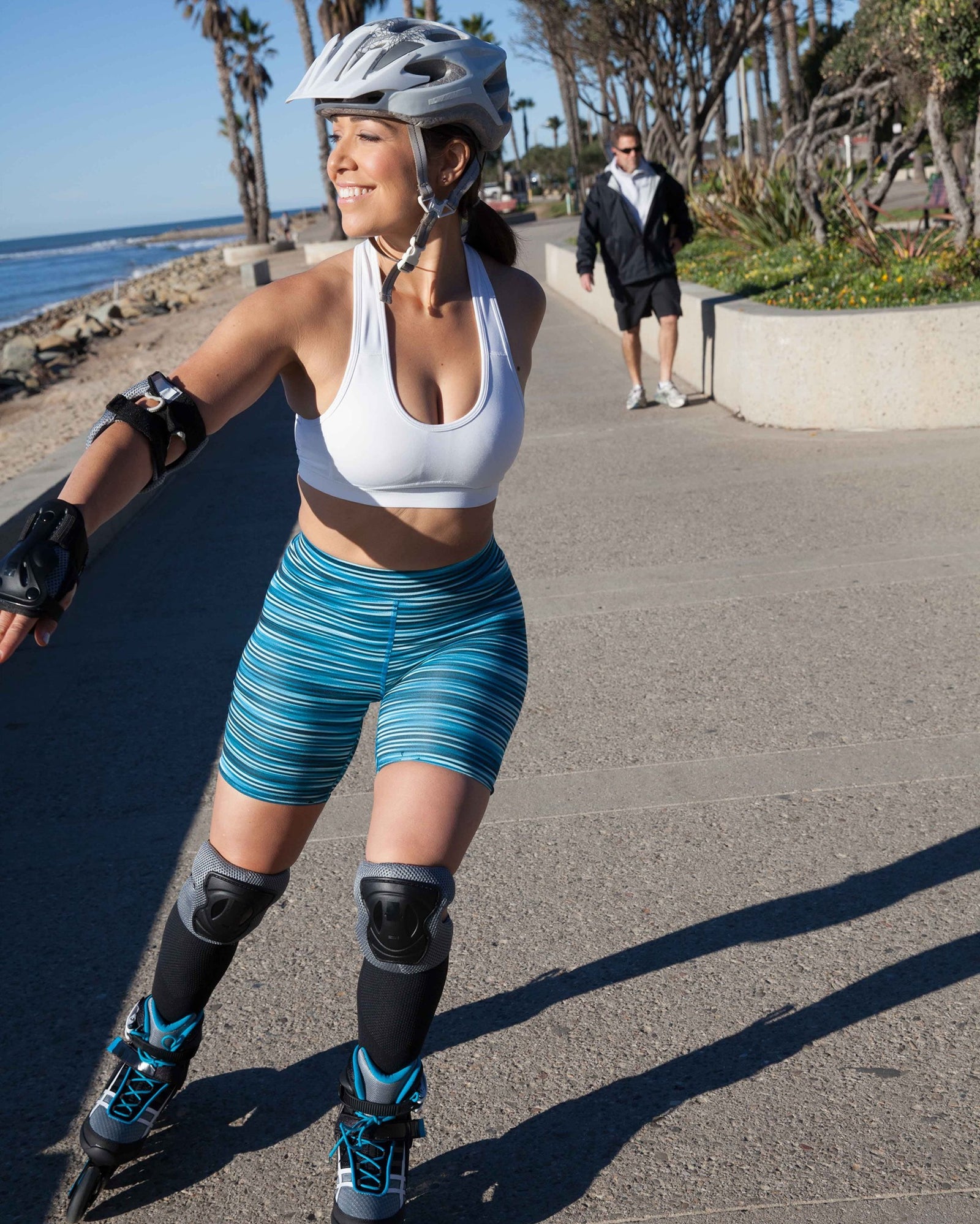
If you want a more athletic or casual look, socks with subtle patterns or brighter colors can add personality while still delivering supportive compression.
|
Occasion |
Recommended Colors/Patterns |
|
Office/Formal |
Black, Navy, Subtle Patterns |
|
Casual/Leisure |
Bright Colors, Stripes, Bold Designs |
|
Athletic/Running |
Sporty Stripes, High-Visibility Colors |
|
Travel |
Classic Neutrals, Moisture-Wicking Styles |
The goal is to choose a design that feels natural with the rest of your outfit while still supporting comfort and mobility.
Frequently Asked Questions
Can you wear compression socks with different outfits, like skirts, pants, or dresses?
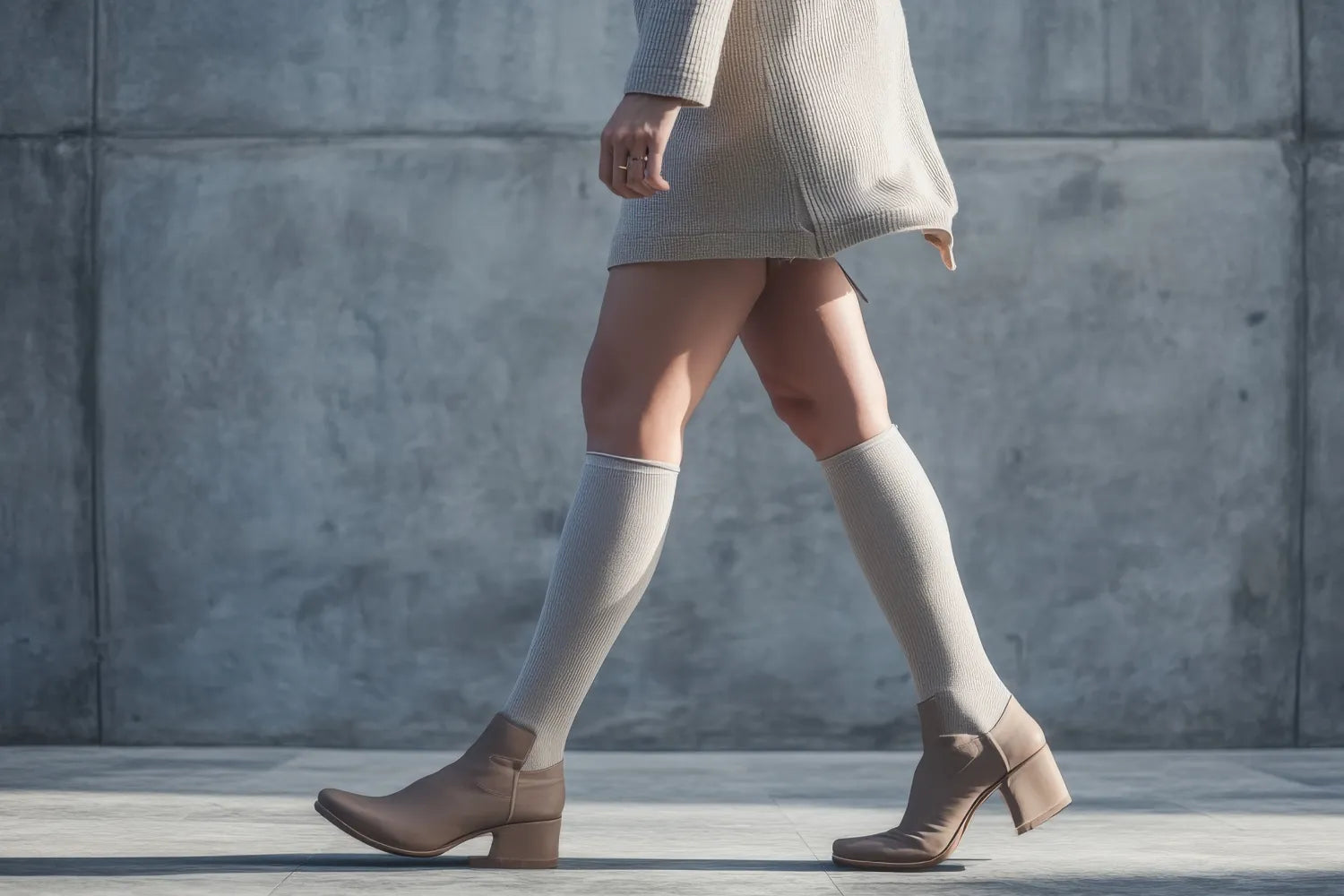
Yes. Compression socks come in different lengths and designs, making them easy to wear discreetly under pants or styled with skirts and dresses when knee-high designs are visible.
What length and toe style works best for styling?
Knee-high compression socks are typically the most versatile. Closed-toe or open-toe styles allow you to adjust for footwear preferences and seasonal comfort.
Do compression socks show under clothes, and how can you prevent bunching?
Proper sizing based on ankle and calf measurements helps compression socks lie flat and stay in place. Following size guides helps prevent bunching under fitted clothing.
Sources:
Could You Benefit From Wearing CompressionSocks | Harvard Health