
Key Takeaways
- A back brace can help support your posture while you wear it by gently guiding your shoulders back and reminding you to sit and stand taller.
- Research on healthy adults shows that braces can change shoulder position and muscle activity in the short term, but they work best as a training tool rather than a permanent fix.
- Pairing a brace with strengthening exercises, stretching, and a posture-friendly workspace helps support longer-lasting results.
Long days at a desk, hours on your phone, and time behind the wheel all pull your body forward. Over time, a rounded upper back and tight shoulders can leave you feeling stiff and less ready to move.
Let’s look at what a back brace actually does for posture, what the research shows, and how to get the most out of one.
What Does a Back Brace Do for Your Posture?
A back brace helps support better posture by gently drawing your shoulders back and giving your body a physical cue to stay upright. This means the brace works as a reminder, not a replacement for your muscles.
Adjustable straps and compression help position your shoulders and upper back in a more neutral position. When you start to slouch, you feel the brace’s tension and reset. For instance, if you tend to slump forward during a long afternoon of emails, the brace nudges you back into alignment before slouching becomes your default.
What Does Research Say About Back Braces and Posture?
Research on healthy adults suggests that posture braces can improve shoulder position and alter how upper back muscles function while you wear them. However, results vary, and most studies measure short-term effects.
In a randomized controlled trial published in the Journal of Athletic Training, researchers studied 38 healthy overhead athletes with forward-head and rounded-shoulder posture. Wearing a scapular brace improved shoulder posture and scapular muscle activity, though the magnitude of these changes varied widely among participants.
A 2023 crossover trial in the journal Healthcare tested a scapular brace on healthy university students during a 30-minute typing task. The brace significantly lowered trapezius muscle activity, suggesting it shared some of the work of holding the shoulders in place. Rounded shoulder posture was slightly better with the brace, but the difference was not statistically significant.
In short, a brace can help support your posture in the moment, while exercise is what builds lasting change.
What Types of Back Braces Support Posture?
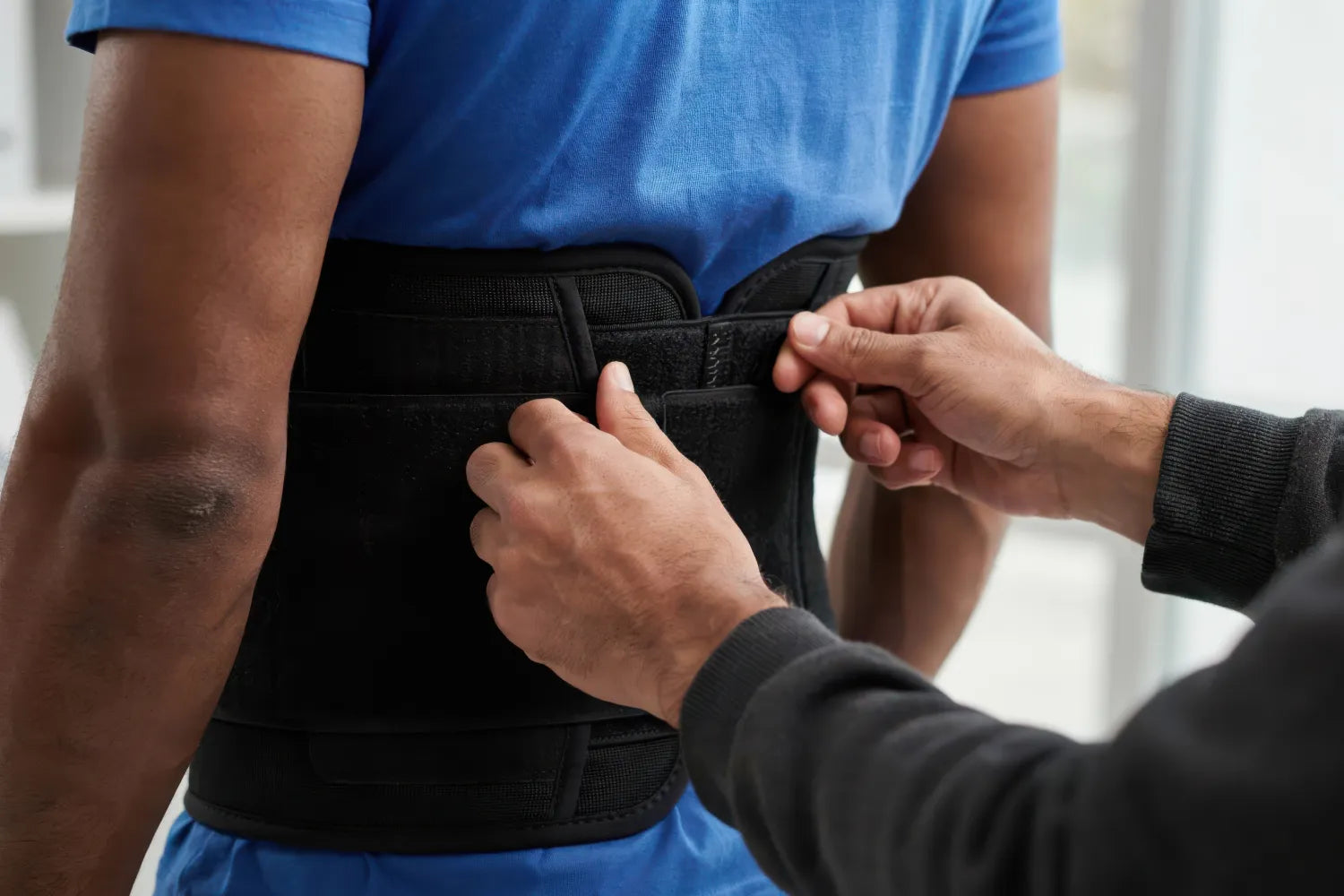
The right back brace depends on whether you need upper back alignment, lower back support, or help recovering after activity. Unlike a lower back belt, which focuses on your lumbar area, a posture corrector targets your shoulders and upper back.
|
Brace Type |
Area Supported |
Best For |
When to Wear |
|
Posture corrector |
Shoulders and upper back |
Desk workers and habitual slouchers |
During sitting, driving, or daily tasks |
|
Back and posture support |
Upper and lower back |
All-day reminders with core support |
Work, chores, and daily movement |
|
Lower back support belt |
Lumbar area |
Lifting and active tasks |
During and after activity |
|
Hot and cold back wrap |
Lower back |
Recovery and soothing tension |
After workouts or long days |
How Long Should You Wear a Back Brace for Posture?
Start by wearing a posture brace for short periods during the activities where you slouch most, then gradually increase your wear time as your body adjusts. The goal is to train your awareness rather than let the brace do all the work.
Try wearing it during focused desk sessions or long drives, then take it off and practice holding that position on your own. Be cautious of wearing a brace for hours at a time from day one, since your muscles get stronger when you challenge them. If discomfort lingers, check in with a healthcare professional.
What Habits Help Improve Posture Alongside a Back Brace?
Strengthening your back and shoulders, stretching tight muscles, and setting up a posture-friendly workspace all help your posture hold up after the brace comes off.
A 2024 systematic review and meta-analysis in BMC Musculoskeletal Disorders found that therapeutic exercise, including strengthening, stretching, and shoulder-focused training, was effective in improving forward head posture, rounded shoulder posture, and upper back posture.
Next, build these habits into your routine:
- Strengthen your upper back with rows, band pull-aparts, and face pulls.
- Stretch your chest and hip flexors, which can tighten during long hours of sitting.
- Position your screen so the top line sits at or below eye level, as recommended in OSHA’s computer workstation guidelines.
- Take regular movement breaks to stand, walk, and reset.
- Recover after workouts with compression and hot or cold therapy to help soothe muscle tension.
If you’re just starting out, some muscle soreness is a normal part of building strength, not a sign to quit.
FAQ
Can a back brace permanently fix bad posture?
No. A brace can help support better posture while you wear it, but lasting change comes from strengthening exercises and consistent daily habits.
Will wearing a posture brace weaken my muscles?
Relying on a brace all day means your muscles do less of the work. Use it in shorter sessions and pair it with strength training to keep your back and shoulders engaged.
Should I wear a posture brace to bed?
Most people don’t need to. Posture braces are designed for upright activities like sitting, standing, and working.
Can I wear a back brace while working out?
It depends on the brace and the activity. Posture correctors are typically designed for sitting and daily tasks, while compression supports built for movement are better suited to training.
Better Posture Starts Here: The Copper Fit Approach
Here at Copper Fit, we know how tension and stiffness can keep you from performing your best, and we believe there’s a better way.
Our Posture Support is an adjustable posture corrector designed to guide your shoulders back during long workdays, while our MAX Back supports both your upper and lower back. When it’s time to recover, our Rapid Relief Back Support combines adjustable compression with hot and cold therapy to help soothe tension after a tough day.
Pair our compression gear with smart daily habits, and you’ll have the support you need to stand taller and keep moving. Explore our full line of back brace support and take the next step toward feeling better, moving more, and enjoying life every day.
Sources:
8 Posture Exercises To Sit and Stand Straighter | Cleveland Clinic