Key Takeaways
-
Downward Dog, Plank, Chaturanga, and Handstand load your weight through extended wrists, which makes wrist discomfort common.
-
Sleeves add flexible compression, wedges reduce your wrist angle, and braces add structure.
-
Modify poses when discomfort is sharp or lingering, and add support when your wrists feel tired or tight.
Wrist discomfort is common among dedicated yogis. However, wrist support can help. The best wrist support for yoga depends on your practice and how much flexibility or structure your wrists need.
In a 2025 survey of 321 regular handstand practitioners, 56.7% reported recurring wrist discomfort, and yoga was the most represented discipline. That’s why a wrist support like a brace or sleeve can be a game-changer for your yoga routine.
Which Yoga Poses Put the Most Stress on Your Wrists?
Poses that combine bodyweight with deep wrist extension put the most stress on your wrists. This means your palms press into the mat while your hands bend back toward your forearms.
The most wrist-loaded poses include:
-
Downward Dog: A sustained hold repeated throughout vinyasa flows.
-
Plank and Chaturanga: Your shoulders stack directly over your wrists.
-
Side Plank: It produced the highest wrist force of the three poses measured in one biomechanics study.
-
Handstands and arm balances: Your full bodyweight moves through your hands.
A one-year study of 354 recreational yogis found that most new discomfort appeared in the upper body, including the wrists and hands. Researchers suggested this may be linked to Downward Dog and similar weight-bearing poses.
Wrist Sleeve vs. Wedge vs. Brace for Yoga: Which Is Best?
A wrist sleeve is best for flowing practices, a wedge is best for reducing your wrist angle, and a brace is best for added structure or recovery. How they compare:
For instance, the same biomechanics study found that elevating the palms in Downward Dog reduced wrist extension from 57.5 to 52 degrees. A wedge applies a similar idea when its high side faces you.
Top Copper Fit Wrist Supports for Yoga
Copper Fit's top wrist supports for yoga are the Elite Wrist Sleeve for flow, the AIR Adjustable Wrist Brace for stability, and the Rapid Relief Stabilizing Wrist Brace for recovery.
Best for Flow: Copper Fit Elite Wrist Sleeve
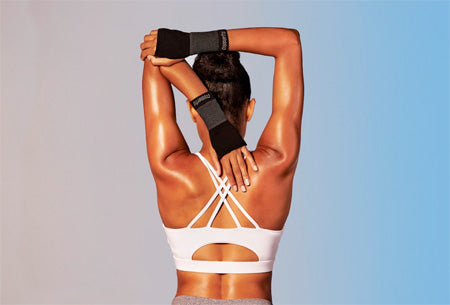
The Elite Wrist Sleeve uses medium-to-strong compression to support your wrist without limiting mobility. This sleeve’s seamless, anti-chafing knit and 4-way stretch moves with you from Plank to Down Dog. Copper infusion also helps reduce odors during sweaty sessions.
Best for Stability: Copper Fit AIR Adjustable Wrist Brace
The AIR Adjustable Wrist Brace adds structure with adjustable straps and two stabilization bars, and its ergonomic design leaves your fingers free to grip the mat. Keep in mind that stabilizers can limit deep extension, so this brace works best for lighter sessions or wear between classes.
Best for Recovery: Copper Fit Rapid Relief Stabilizing Wrist Brace
The Rapid Relief Stabilizing Wrist Brace pairs adjustable compression with a removable gel pack you can use hot or cold, which can help with discomfort and recovery. In one study, participants who applied heat or cold immediately after exercise lost only 4% of their strength, compared with 24% in the group that used neither.
When To Modify a Yoga Pose vs. When to Add Wrist Support
Modify the pose when discomfort is sharp, lingering, or builds during practice. Add support when your wrists feel tired or tight. Modifications reduce the load itself. In the biomechanics study mentioned above, lowering the knees reduced the maximum wrist force in Side Plank from 433 to 360 newtons.
Try these swaps:
-
Dolphin instead of Down Dog
-
Knees down in Plank and Chaturanga
-
A wedge under the heels of your hands
In short, support works best alongside good alignment. If discomfort persists, check in with a healthcare professional.
FAQs
Can you wear a wrist sleeve during yoga?
Yes. A flexible compression sleeve moves with your wrist, so it won't block your range of motion in Down Dog or Plank.
Is a yoga wedge better than a wrist brace?
They do different jobs. A wedge reduces your wrist angle, while a brace adds structure and support.
Should I use heat or cold on my wrists after yoga?
Cold is typically used for fresh soreness right after practice. Heat is typically used for lingering stiffness a day or more later.
Can I do handstands with a wrist brace?
Braces with stabilizer bars can limit the wrist extension required for handstands, so a flexible sleeve is usually the better fit.
The Bottom Line
Here at Copper Fit, we know how frustrating it is when your wrists hold back your practice. That's why we design our compression gear to help support your wrists through every flow, hold, and recovery session. Explore our full range of compression wrist sleeves and braces, and get back to the poses you love.
Sources:
Wrist Biomechanics In Yoga | Journal of Hand Surgery
Cold Vs. Heat After Exercise-Is There a Clear Winner for Muscle Soreness | PubMed