Key Takeaways
-
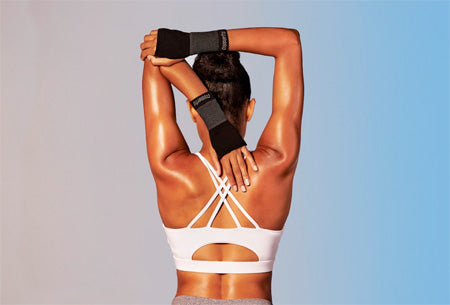
Wrist wraps offer flexible, adjustable support best suited for bench press and other pressing movements.
-
Wrist braces offer firmer, more structured support suited to overhead lifts and heavy pulling sessions.
-
Copper Fit's compression wrist braces combine support with moisture-wicking, anti-chafing comfort so lifters get protection without sacrificing freedom of movement.
For bench press and other pressing movements, flexible wrist wraps typically offer a better fit, since they let you adjust the tightness set to set. For overhead lifts and heavy pulling sessions, a structured wrist brace is usually the smarter choice, providing consistent compression through longer, more demanding sessions.
Copper Fit's compression wrist braces are built for that second category, combining structured support with moisture-wicking, anti-chafing comfort so your wrists stay protected without losing mobility.
Wrist Wraps vs. Wrist Braces: What's the Difference?
Wrist wraps are flexible, hook-and-loop bands designed to add adjustable tightness around the wrist joint during lifts. Wrist braces, by comparison, use a more structured build with built-in compression panels for consistent, all-session support.
|
Feature |
Wrist Wraps |
Wrist Braces |
|
Flexibility |
High, fully adjustable |
Moderate, structured fit |
|
Best for |
Bench press, pressing movements |
Overhead lifts, heavy pulls |
|
On/off ease |
Requires wrapping each use |
Slip-on design |
|
Compression |
Variable, lifter-controlled |
Consistent, built-in |
A 2024 study in the Journal of Strength and Conditioning Research found that although wrist wraps did not significantly change bench press strength or power, lifters still perceived them as more stable, despite some added discomfort. In short, wraps may not add raw power, but the added sense of stability is real and can matter for lifter confidence under heavy loads.
When Should You Wear a Wrist Brace While Lifting?
Wrist braces are most useful during pressing and overhead movements where the wrist is loaded in extension for extended periods.
Reach for one during:
-
Heavy pressing days, including bench and incline press
-
Overhead work, like the strict press or push press
-
High-volume pulling sessions where grip and wrist tension build up
-
A return to training after time off, while your joints and connective tissue rebuild tolerance
Be cautious about relying on a brace alone to mask worsening tension. If soreness lingers well beyond a normal training session, it's worth revisiting your form, load, or recovery routine first.
Top Wrist Support Picks for Bench, Overhead, and Heavy Pulls
For lifters managing soreness on heavy pulling or pressing days, the Rapid Relief Stabilizing Wrist Brace pairs adjustable compression straps with a removable gel pack for targeted hot- or cold-therapy support, plus built-in stabilization and a copper-infused knit that helps reduce odor.
For overhead work and high-volume pulling, the AIR Adjustable Wrist Brace uses two removable stabilization bars for structured support while its ergonomic design keeps fingers free to grip the bar. The moisture-wicking, breathable, copper-infused fabric holds up through long training sessions, making it a fit for lifters who want consistent support without sacrificing mobility.
The brace is also copper-infused. Antibacterial fabric finishes, including those using copper, have been shown to reduce odor development by limiting the bacterial buildup that causes it, which is why our copper-infused knit stays fresher between training sessions.
When choosing wrist support, look for adjustability, breathable, moisture-wicking material, and a seamless construction that won't chafe under a barbell.
FAQ
Do I need a wrist brace for bench press?
Not necessarily. Many lifters prefer a flexible wrap for bench press, though a compression brace is a solid alternative if you want structured support without wrapping each set.
Can I wear a wrist brace for overhead lifts?
Yes. Braces are a strong choice for overhead pressing since they support the wrist in an extended position throughout the lift.
How tight should a wrist brace be?
It should feel snug and secure without restricting movement or circulation. If your hand tingles or goes numb, loosen it.
Sources:
Wrist Wraps Do Not Affect Barbell Bench Press | Journal of Strength & Conditioning Research