Key Takeaways
-
Wrist braces stabilize the joint during the swing and release, helping bowlers maintain a consistent hand position through impact.
-
Positive-lock, adjustable, and cock-lift styles each support the wrist differently, so the right choice depends on your release style and how much mobility you want to keep.
-
Copper Fit offers wrist support options ranging from stabilizing braces to flexible compression sleeves, depending on how much lockdown versus mobility your game requires.
For bowlers wanting extra wrist support, positive-lock braces offer the most stability by holding the wrist in a fixed position, while adjustable and cock-lift braces allow more natural movement for bowlers who prioritize feel. The Rapid Relief Stabilizing Wrist Brace, AIR Adjustable Wrist Brace, and Elite Wrist Sleeve from Copper Fit each fit a different point on that spectrum, from firm lockdown to light, flexible support.
How Does a Wrist Brace Affect Your Bowling Release?
A wrist brace limits unwanted flex and rotation in the joint, which helps keep your hand in a repeatable position at the moment of release. This matters because release consistency is closely tied to performance.
Research on elite 10-pin bowlers found that changes in wrist flexion and pronation before and during ball release were connected to shifts in release velocity over the course of a match.
In short, a wrist that drifts out of position, even slightly, can throw off your entire shot. This is where added support comes in. A study testing external wrist supports found that both taping and elastic bandaging improved joint position sense, meaning the wrist's ability to sense and return to a specific position, in healthy adults.
For bowlers, that translates to a wrist more likely to stay aligned through the swing, easing the tension that builds from repetitive throws.
What Are the Main Styles of Bowling Wrist Braces?
Not all wrist braces work the same way. Here are the three most common styles bowlers use:
-
Positive-lock braces: Rigid support that holds the wrist in a fixed position, popular with bowlers who want maximum stability and minimal wrist movement.
-
Adjustable braces: Straps or dials let you customize tightness and range of motion, ideal for bowlers fine-tuning feel between practice and league play.
-
Cock-lift braces: Designed to hold the wrist in a slightly cupped position at address, helping some bowlers maintain a consistent downswing.
Unlike rigid positive-lock designs, adjustable and cock-lift styles allow more natural wrist movement, which some bowlers prefer for feel and touch shots.
Top Wrist Support Picks for Bowlers
If you are looking for a wrist support to wear while bowling, here are a few of our top picks:
Rapid Relief Stabilizing Wrist Brace:This brace is anatomically contoured, features adjustable straps, and provides built-in stabilizing support. It also includes a removable hot- or cold-gel pack, making it a solid option for bowlers who want a locked-in feel during play and a way to soothe tension after league night.
AIR Adjustable Wrist Brace:With adjustable compression straps and support bars, our AIR wrist brace keeps fingers free to move while still providing targeted stability, making it a good fit for bowlers who want customizable support without a fully rigid lock.
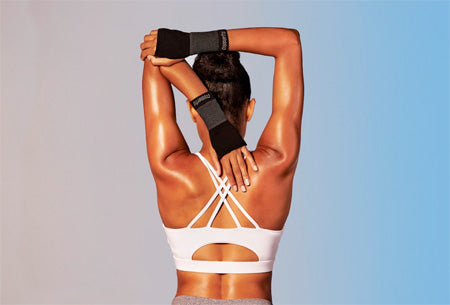
Elite Wrist Sleeve:Unlike a rigid brace, this advanced compression sleeve uses medium-to-strong compression to support healthy blood flow, which can, in turn, aid recovery and soothe discomfort. Seamless, anti-chafing knit and four-way stretch mean this sleeve won’t limit mobility, making it a good choice for bowlers who want light, flexible support during practice or warmups rather than full stabilization.
FAQ
Do wrist braces actually improve bowling accuracy?
A brace itself does not guarantee accuracy, but by helping stabilize the wrist through release, it can support a more consistent hand position, which is closely linked to scoring consistency.
Should I wear a wrist brace every game, or just during practice?
Many bowlers wear support during both practice and competition, though some prefer to use it only in practice to build wrist strength and control naturally.
What's the difference between a wrist brace and a wrist sleeve?
A brace typically includes rigid or semi-rigid components for firm stabilization, while a sleeve relies on compression fabric alone for lighter, more flexible support.
How tight should a bowling wrist brace fit?
A wrist brace should feel snug and secure without restricting circulation or causing numbness.
Sources: