Key Takeaways
-
The most effective posture correctors combine adjustable compression, breathable materials, and a fit designed for a woman's frame, not a one-size-fits-all harness.
-
A posture corrector works best as part of a routine that includes movement, stretching, and ergonomic changes, not as a standalone fix.
-
Comfort under clothing, ease of adjustment, and all-day wearability matter just as much as the support itself when choosing the right product.
If you spend your day hunched over a laptop, scrolling on your phone, or lifting kids and grocery bags, you already know the toll it takes on your shoulders, neck, and upper back.
That rounded, tired feeling by 3 p.m. is not just in your head. It is the cumulative effect of hours spent in positions your body was never designed to hold for long.
The good news is that posture support doesn’t require a total lifestyle overhaul. The right posture corrector, paired with a few consistent habits, can help you stand taller, move with more confidence, and ease the tension that builds up from modern life.
This guide breaks down what to look for in a posture corrector designed for a woman's body, how these products actually work, and what else you can do to support your posture long-term.
What Can Cause Poor Posture?
Prolonged sitting is one of the biggest contributors to poor posture. Research has found that sitting at a desk for hours without proper ergonomic support is linked to neck and back tension, as well as sore wrists and shoulders.
Chair height, equipment spacing, and desk posture all play a role in how much stress your body absorbs during a workday. Add in phone use, which pulls the head forward and down, and the shoulders and upper back end up carrying a load they were not built to hold for hours at a time.
None of this means something is wrong with you. It means your body is responding normally to the positions you are asking it to hold, day after day. The goal is to build habits and use tools that help your body stay aligned and supported.
What To Look for in a Posture Corrector or Support Wrap for Women
Between desk jobs, carrying bags or children on one side of the body, and the demands of everyday clothing, women frequently need a posture solution that fits differently than a bulky, one-size unisex brace.
Here are some factors to consider when choosing a posture support.
Adjustability and Compression
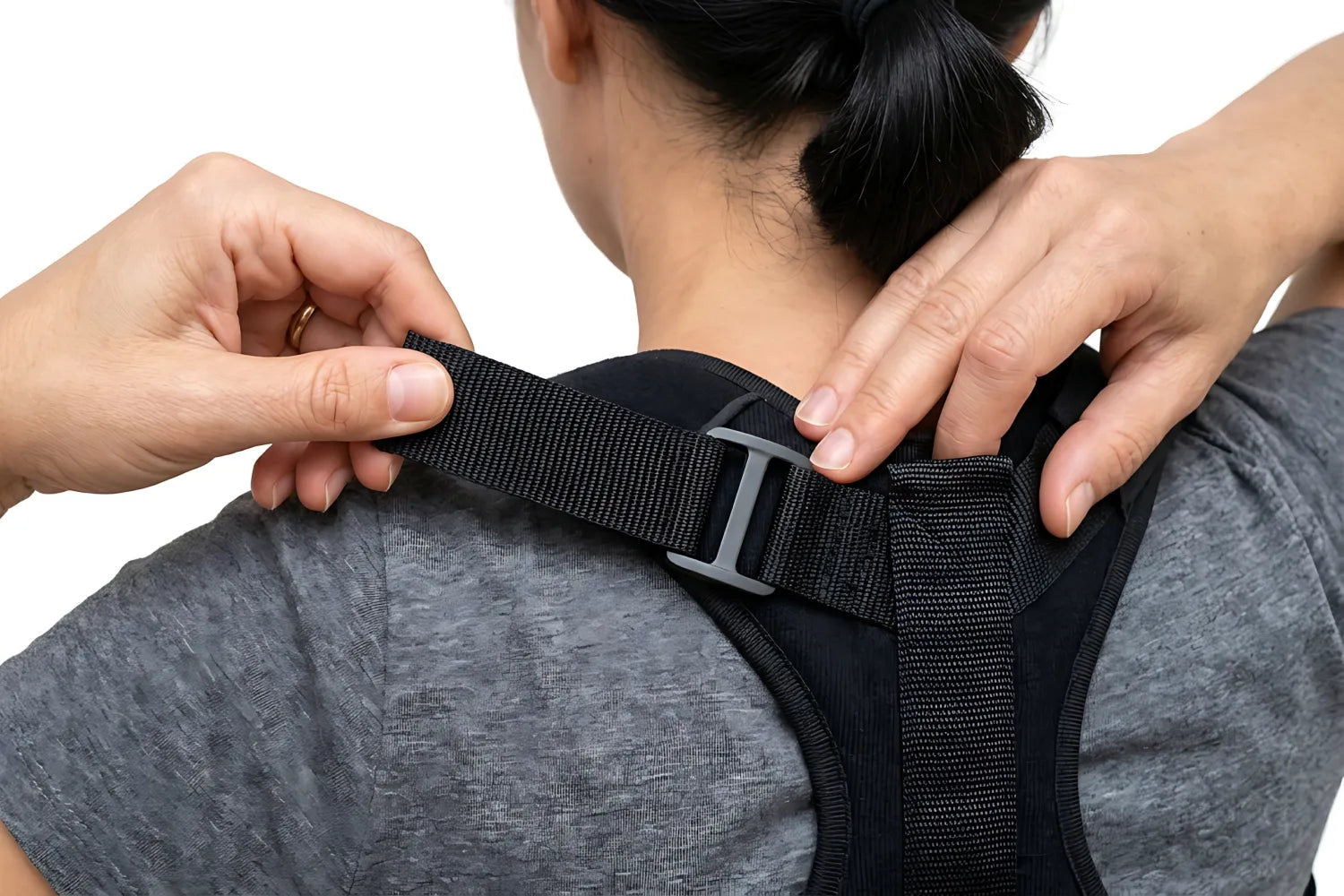
A posture support product should adapt to your body, not the other way around. Adjustable straps and compression panels allow you to fine-tune the fit throughout the day, whether you are sitting at a desk in the morning or on your feet by the afternoon.
Look for designs with adjustable stretch straps that accommodate different body types, rather than a fixed harness that only works for one shape.
Comfort Under Clothing
If a posture corrector is bulky or visible under your clothes, you are far less likely to wear it consistently. A discreet, low-profile design that sits comfortably under a shirt or blouse makes it realistic to wear during a full workday, not just around the house.
Breathability and Moisture-Wicking Fabric
All-day wear only works if the material breathes. Moisture-wicking fabric helps you stay comfortable whether you are at a desk, running errands, or working out. Materials that trap heat or feel stiff against the skin tend to end up in a drawer within a week.
Copper-Infused Fabric
Some posture supports use copper-infused fabric, which is specifically formulated to reduce odor. This matters for a product you are wearing directly against your skin for extended periods, especially if you are active throughout the day.
Top Posture Support Picks for Women
If you are shopping for a posture corrector, it helps to understand the difference between products designed for general posture awareness and those built for more targeted, dual-zone support.
The Copper Fit Posture Support is designed as a discreet, everyday corrector that reminds you to adjust your neck, shoulder, and back position throughout the day. It features adjustable stretch straps built to fit a range of body types, a comfortable padded design, and a low-profile fit that stays hidden under clothing. It is lightweight, moisture-wicking, and made with copper-infused fabric to help reduce odor during all-day wear.
The Copper Fit MAX Back + Posture Support takes things a step further with a dual-action design. It combines a posture-support panel for the upper back with targeted compression for the lower back, using an X-Compression System that adjusts to your body as your day shifts from sitting to standing to moving.
The breathable, lightweight construction is slim enough to wear under most clothing, and the fully adjustable shoulder straps and front hook-and-loop closure make it easy to put on and take off. It is built to help support better posture and provide all-day comfort, whether you are at a desk, on your feet, or tackling everyday tasks.
Both options reflect the same idea: posture support should work with your day, not against it.
Posture Corrector vs. Targeted Support Wrap: What Is the Difference
Traditional posture correctors, like the ones described above, are designed to encourage alignment through gentle, consistent reminders and structural support across the shoulders and upper back. They work passively, helping retrain your posture simply by wearing them.
Targeted support wraps, on the other hand, are built more around compression and temperature therapy for the muscles that posture strain affects most, like the lower back, neck, and shoulders.
These products are not designed to directly correct alignment. Instead, they help soothe the tension and soreness that often builds up alongside poor posture, especially after a long day or an intense workout.
Both categories serve a purpose, and many people find that using them together, a corrector during the workday and a compression or hot and cold wrap for recovery in the evening, covers the full picture.
Tips for Building Better Posture Habits
A posture corrector can help remind your body what proper alignment feels like, but it works best when paired with habits that build strength and awareness over time.
Take movement breaks
Sitting in one position for too long, even a good one, can put stress on your spine and joints. Research on desk-based work has linked longer sitting time and fewer breaks to low back discomfort, so standing, stretching, or walking for a minute or two every 30 to 45 minutes can make a real difference.
Set up your workspace correctly
According to Mayo Clinic guidance on office ergonomics, your chair should support your spine, your feet should rest flat on the floor, and your monitor should sit at or slightly below eye level. Small adjustments to your desk setup can meaningfully reduce the strain your neck and shoulders absorb over an eight-hour day.
Strengthen your core and upper back
Posture is not just about awareness. It is also about having the muscular support to hold better alignment without effort. Exercises that target the core, upper back, and shoulder stabilizers help your body maintain natural posture, rather than relying on conscious correction throughout the day.
Watch your phone posture
Looking down at a phone for extended periods pulls the head forward, adding significant strain to the neck and upper back. Holding your phone at eye level when possible, even briefly, can ease some of that load.
How To Choose the Right Fit
Sizing matters more with posture correctors than with most apparel, since a poor fit can undermine the support entirely.
Start by measuring your chest or torso rather than relying on your regular clothing size, since posture correctors are sized differently than shirts or jackets. Consider how you plan to wear it. Some people prefer it under a shirt for a discreet look, while others wear it over a base layer during workouts or errands.
Signs of a correct fit include snug but not restrictive compression, no pinching or digging at the shoulders or underarms, and a full range of motion in your arms. If you cannot comfortably reach overhead or twist at the torso, the fit needs adjusting.
When To Use Heat vs. Cold for Posture-Related Tension
Many posture support products, including those with hot- and cold-therapy capabilities, work best when you understand which temperature suits the situation.
Cold is generally the better choice for new or recent tension or soreness, typically within the first day. According to Johns Hopkins Medicine, cold therapy helps ease discomfort by numbing the affected area and reducing swelling where it is applied.
Heat tends to work better for tension that has been building for a day or longer. Heat increases blood flow to an area and can help reduce stiffness and muscle spasms, which is useful when muscles feel tight. This makes heat a good option for lingering upper back or shoulder tightness that builds up after days of poor posture, rather than for a single acute strain.
If you are unsure which to use, a simple guideline helps: reach for cold when something feels fresh or swollen, and reach for heat when something feels tight, stiff, or achy over time.
FAQ
Do posture correctors actually work?
They can help build awareness and encourage better alignment over time, but they work best when paired with stretching, movement, and strengthening habits rather than used as a standalone fix.
How long should you wear a posture support wrap each day?
Most people start with shorter periods, around 30 to 60 minutes, and gradually build up wear time as their body adjusts and comfort allows.
Can you wear a posture support product under clothing?
Yes. Look for a low-profile, seamless design specifically made to sit discreetly under shirts or blouses for all-day wear.
Is heat or cold better for posture-related tension?
Cold generally works best for tension that feels fresh or recent, while heat tends to help more with tightness or soreness that has been building for a day or longer.
The Copper Fit Take
At Copper Fit, we know what it feels like when tension and soreness get in the way of moving through your day the way you want to. Posture support is not about achieving a perfect, rigid position. It is about giving your body the reminders and the recovery tools it needs to move more freely, with less discomfort standing in the way.
Whether that means wearing the Posture Support to build daily alignment awareness, reaching for the MAX Back + Posture Support for dual-zone coverage through a demanding day, or pairing either with real movement and stretching habits, the goal stays the same: helping you stay active, feel better, and keep showing up for the things that matter, every single day.
Sources:
The influence of smartphone use on spinal posture – A laboratory study | ScienceDirect