Key Takeaways
-
Knee sleeves combine compression, warmth, and joint feedback that can help support stability during heavy lifts like squats and deadlifts.
-
Sleeve thickness should match training intensity: 3mm for daily wear, 5mm for mid-intensity work, and 7mm for powerlifting.
-
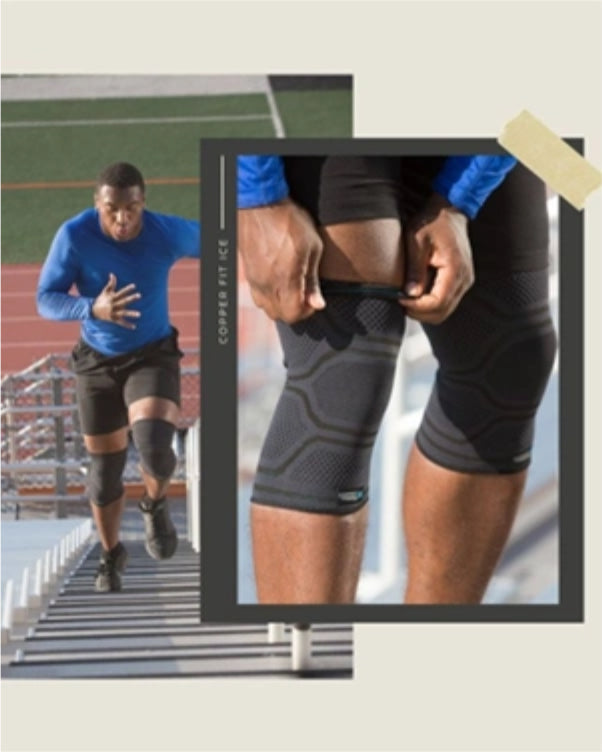
Copper Fit's Pro Series and Elite Knee Sleeves are built to support lifters during both training sessions and heavy lifting days.
Choosing the right knee sleeve can make a real difference in how your knees feel during squats, deadlifts, and other heavy lifts. The best knee brace for weightlifting combines compression, warmth, and a snug fit that helps support joint stability without limiting your range of motion.
In this guide, we'll break down what a knee sleeve actually does under load, how to choose the right thickness for your training goals, and what to know if you're lifting in a sanctioned competition.
What Does a Knee Sleeve Do Under Load?
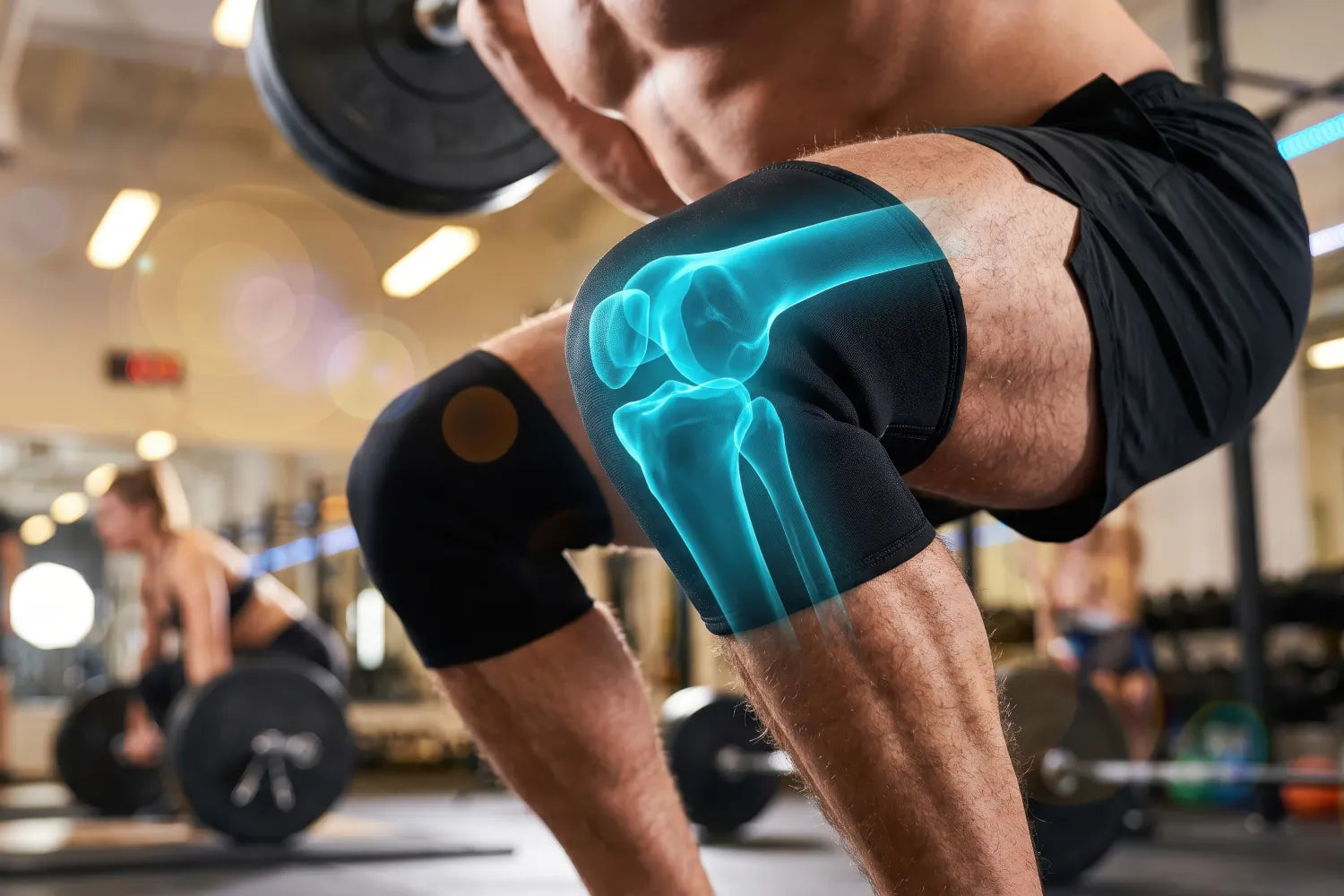
A knee sleeve supports the knee joint during heavy lifting through a few key mechanisms working together. This means compression, warmth, and joint feedback all play a role in how a sleeve feels and performs during a heavy set.
-
Compression helps support healthy blood flow to the knee area during exertion.
-
Warmth helps promote muscle relaxation by keeping the surrounding muscles and skin warm through your working sets.
-
Joint feedback (proprioception) gives lifters a better sense of knee positioning throughout a lift.
Research supports this last point specifically. A study published in The Knee found that wearing a knee sleeve improved proprioception, or joint position sense, in healthy young athletes compared with no support. For lifters, that added awareness can help you stay more locked in during a heavy squat or deadlift.
Choosing the Right Sleeve Thickness
The right sleeve thickness depends largely on how heavy you are and how often you train. Unlike a one-size-fits-all approach, sleeve thickness should scale with your training intensity.
|
Thickness |
Best For |
Support Level |
|
3mm |
Daily training, warm-ups, general activity |
Light |
|
5mm |
Mid-intensity lifting, moderate loads |
Moderate |
|
7mm |
Heavy powerlifting, max-effort squats |
Maximum |
For lifters who train daily or want support without added bulk, the Copper Fit Elite Knee Sleeve is built to move with you through everyday training. For lifters chasing heavier numbers, the Copper Fit Pro Series Knee Sleeve is designed to deliver a higher level of support suited to more demanding training sessions.
Knee Sleeve Considerations for Competition Lifting (IPF)
If you're planning to compete, checking your federation's equipment rules ahead of time matters. The International Powerlifting Federation (IPF) sets specific requirements for knee sleeves used in sanctioned meets, including a maximum thickness of 7mm and a maximum length of 30cm. Sleeves must also come from a manufacturer on the IPF's approved equipment list.
Be cautious of showing up to a sanctioned meet with a non-compliant sleeve. Rules can vary by federation and change over time, so it's worth confirming current requirements directly with your federation before competition day. For general training, this isn't a concern, and Copper Fit's Pro Series is a strong option for lifters building toward heavier, more serious training goals.
Squats vs. Deadlifts: Do You Need Different Support?
The same knee sleeve typically works for both squats and deadlifts, but the way it supports you differs slightly between the two lifts. During squats, a sleeve provides sustained compression throughout the full range of knee flexion. During deadlifts, that same sleeve helps support the knee joint through the hip-hinge and lockout portions of the lift, where positioning matters most.
FAQ
Do knee sleeves help with squats?
Yes, knee sleeves can help support compression, warmth, and joint stability throughout the movement, which many lifters find useful during heavier sets.
What thickness knee sleeve is best for heavy lifting?
Most lifters reach for 5mm to 7mm sleeves for heavier training sessions, reserving 3mm sleeves for daily or lighter work.
Can I wear Copper Fit sleeves for competition lifting?
Always check your federation's current equipment rules first, since thickness, length, and manufacturer requirements vary and change over time.
How is a knee sleeve different from a knee brace?
Knee sleeves offer flexible, all-around compression support, while braces typically include structured components built for more targeted joint support.
Find Your Fit With Copper Fit
Here at Copper Fit, we know what it feels like to be held back by tension and soreness instead of pushing through your next set. That's why our compression gear is built to support you through every stage of training, from daily warm-ups to your heaviest lifting days.
Whether you're reaching for the Elite Knee Sleeve for everyday support or the Pro Series for more demanding sessions, our goal is the same: to help you move, lift, and recover with confidence.
Sources:
Technical Rules Book | International Powerlifting Federation