Key Takeaways
-
Volleyball has one of the highest rates of jumper's knee among sports, largely because of how often players jump and land.
-
The more sets you play and the more you jump, the more load your knees handle, so support and recovery should scale with your schedule.
-
Softer, bent-knee landings let your hips and knees share the work of absorbing impact.
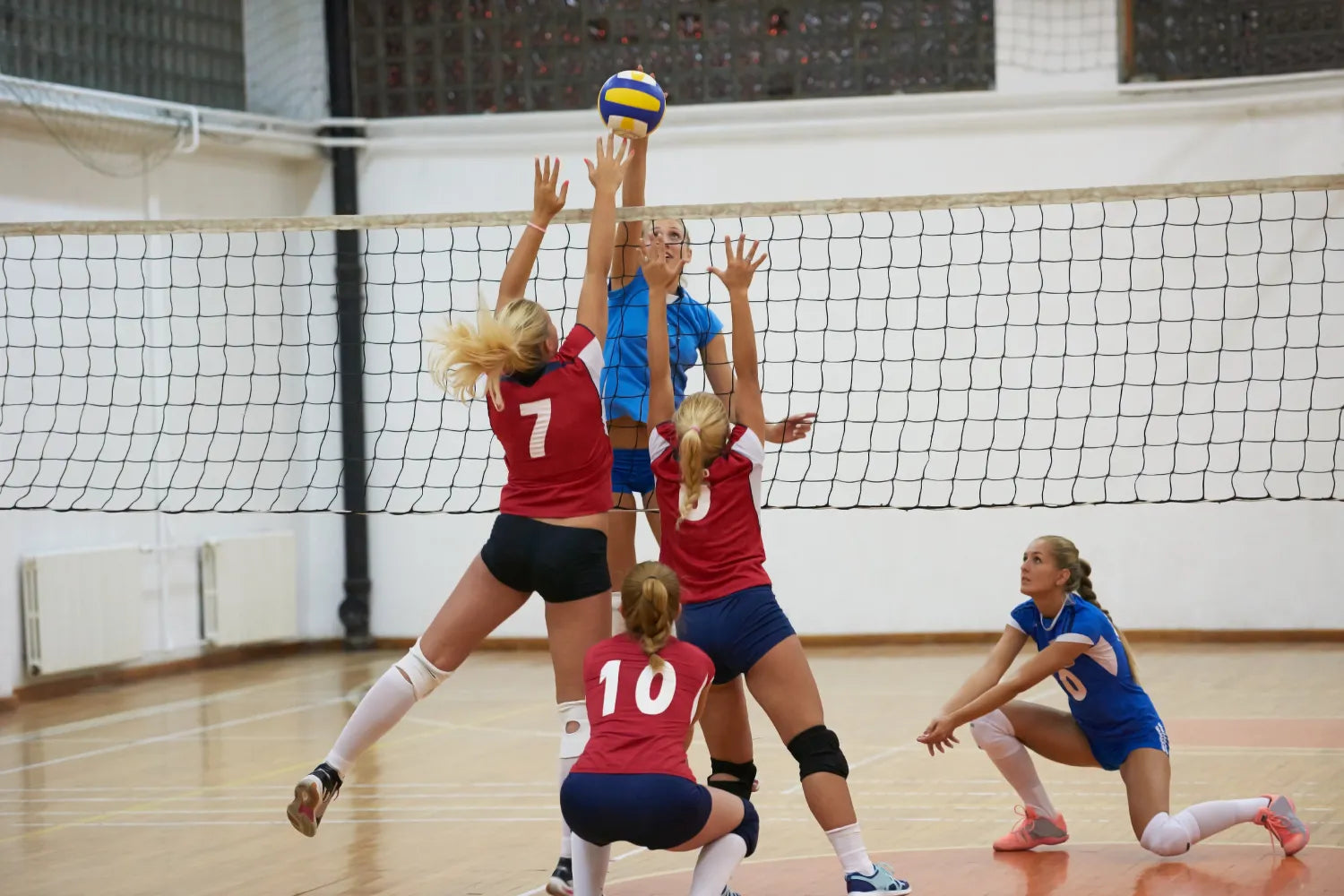
Every approach, block, and jump serve ends the same way: with your knees absorbing the landing. Stack that across a tournament weekend, and it's no surprise so many players feel tension and soreness just below the kneecap.
In this guide, we’re going over how volleyball can impact the knees, what to look for in support, and our top knee brace picks for volleyball.
Why Is Volleyball So Tough on Your Knees?
Jumper's knee is the common name for soreness and tension just below the kneecap that builds from repeated jumping and landing. And volleyball players may feel it more than most. In a study of more than 600 elite athletes across nine sports, volleyball had the highest rate of jumper's knee symptoms at 44.6%, ahead of basketball at 31.9%.
So why is the rate of jumper’s knee so high in volleyball players? The biggest driver is volume. A four-year study of young elite volleyball players linked each extra hour of weekly volleyball training, and each extra set played per week, to higher odds of developing jumper's knee.
A related study that video-recorded 11,943 jumps found that jump counts varied widely among players on the same squad, and the researchers suggested that total jump volume may matter more than total training hours.
The bottom line: the more you jump, the more your knees need smart support and recovery.
What To Look For in a Volleyball Knee Brace
The best volleyball knee support gives you compression and structure without limiting the deep bend of your approach.
Look for:
-
Light-to-medium compression you can play in all match
-
4-way stretch or a hinged design that bends naturally
-
An open-patella design that helps keep the kneecap supported
-
A stay-in-place fit that won't slide during jumps
-
Breathable, moisture-wicking fabric for long tournament days
-
A profile that layers comfortably with your kneepads
Top Copper Fit Picks for Volleyball Players
When choosing your knee support, consider your movement on the court and your recovery.
Pro Series Knee Sleeve: Best for Everyday Play
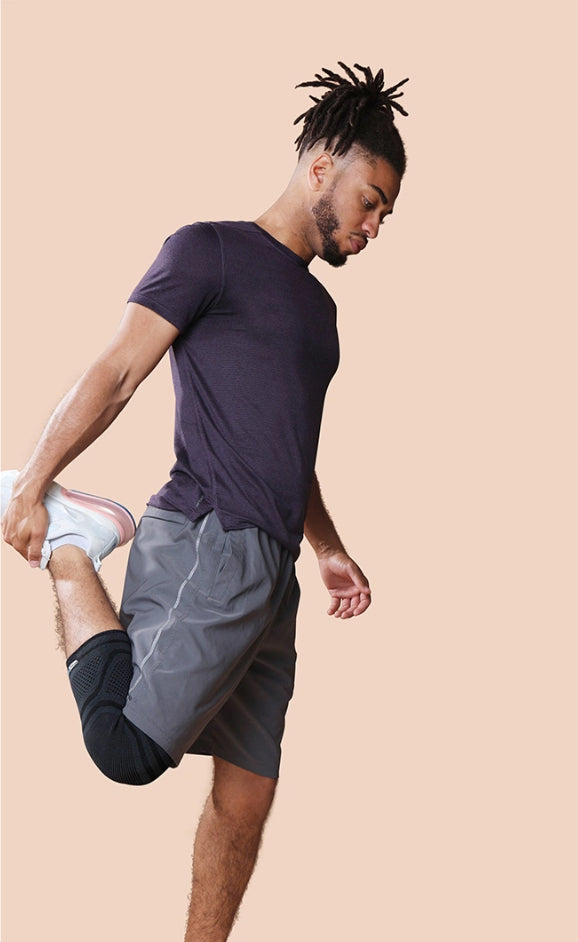
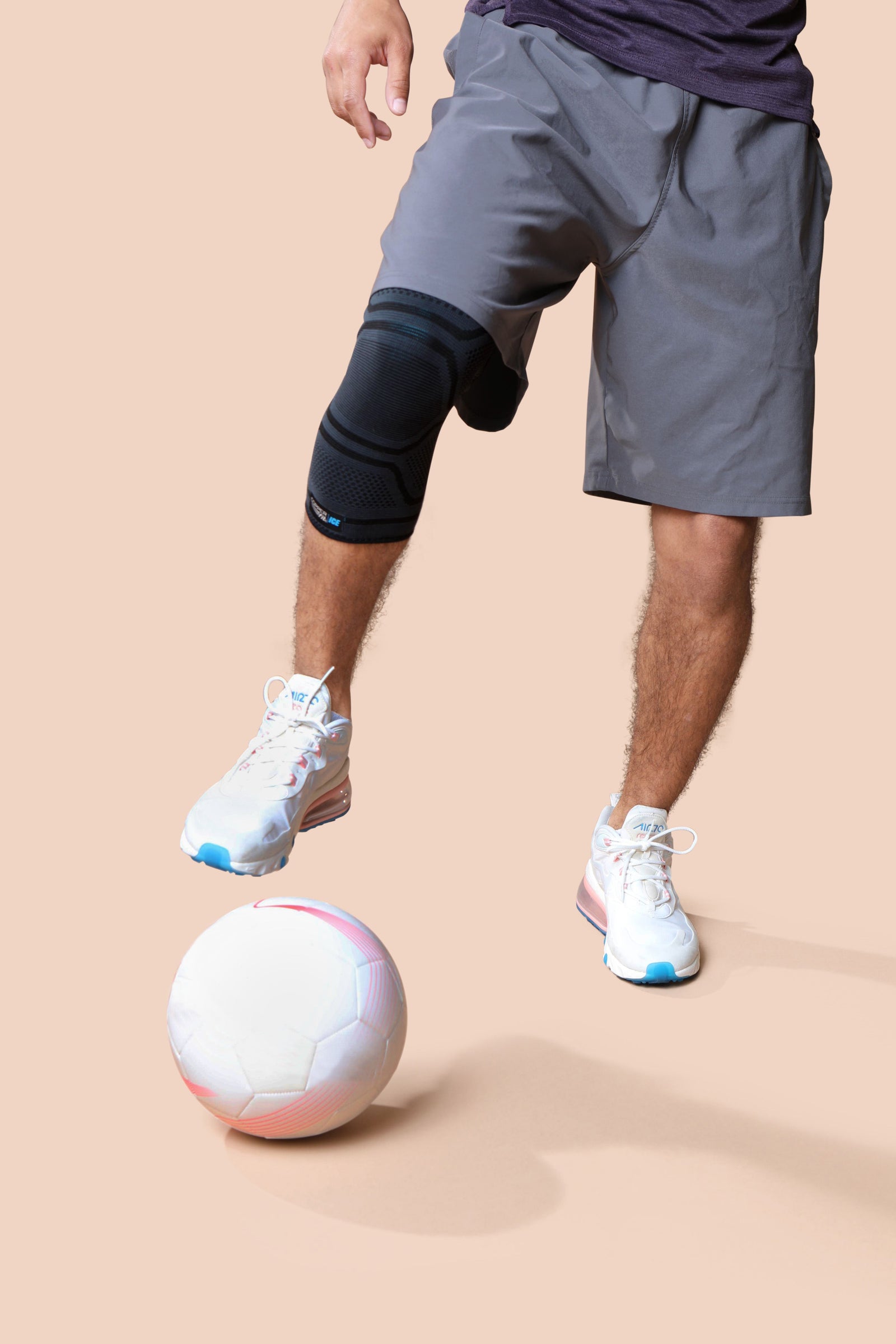
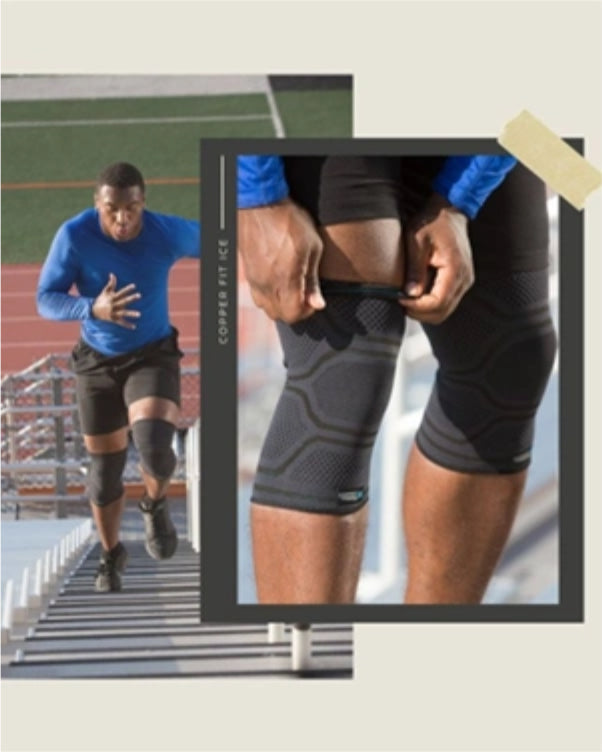
Our Pro Series Knee Sleeve offers built-in kinesiology bands that deliver light-to-medium targeted compression and dynamic support, while 4-way stretch keeps your approach fluid. A reinforced stay-in-place band and moisture-wicking fabric hold up through long practices, and copper infusion reduces odors.
Natural Motion Knee Brace: Best for Extra Lateral Support
The Natural Motion Knee Brace features rigid side supports and the proprietary X-PIVOT™ hinge, providing lateral knee support and a natural bending motion, ideal for defensive shuffles and crowded landings at the net. Adjustable straps and an open-patella design help keep everything in place. Check your league's rules before wearing a hinged brace in competition.
Rapid Relief Knee Wrap: Best for Post-Match Recovery
The reusable hot/cold gel pack in the Rapid Relief Knee Wrap delivers hot or cold therapy evenly around the knee, while an adjustable strap lets you stay mobile. Use it cold for fresh soreness right after play, or warm for lingering tightness a day or more later.
Land Smarter, Recover Better
Support gear works best alongside good mechanics. In a biomechanics study, soft landings with deeper knee bend shifted more of the energy absorption to the hip and knee muscles compared with stiffer landings.
To prevent knee injuries on the court:
-
Land on both feet when you can, with knees bent and hips back
-
Track your sets and build rest days into heavy tournament stretches
-
Warm up dynamically before every session
For stretches that target the area, check out our jumper's knee guide.
FAQ
Should I wear a knee sleeve or a knee brace for volleyball?
A compression sleeve suits most players for everyday play because it supports the knee without limiting movement. A hinged brace adds firmer lateral support if you want more structure.
Can I wear a knee sleeve under volleyball kneepads?
Many players do. Just make sure the combination doesn't bunch behind the knee or restrict your approach.
Should I use heat or cold after a volleyball match?
Cold is typically used for fresh soreness right after play. Heat is typically used for lingering tightness a day or more later.
Is a knee brace a substitute for seeing a professional?
No. If discomfort persists or gets worse, check in with a healthcare professional.
Keep Playing the Game You Love
Here at Copper Fit, we know the cycle: a big weekend of matches, then days of soreness and tension that slow you down. We believe there's a better way. Our compression gear is designed to support your knees on the court, and our hot and cold therapy helps soothe soreness off the court.
Shop our knee collection and get back to every dig, block, and kill.
Sources:
Effect of landing stiffness on joint kinetics and energetics in the lower extremity | PubMed