Key Takeaways
-
Linemen and skill players face different physical demands, so their knee support needs differ.
-
Research shows that structured, hinged bracing is associated with fewer major knee injuries in high-contact positions, such as the offensive line.
-
Choosing between a hinged brace and a compression sleeve comes down to your position, contact level, and mobility needs.
Linemen absorb repeated, high-force contact on nearly every snap, while skill players rely on speed, cutting, and quick direction changes. Because of this, a one-size-fits-all knee brace rarely works for every football player.
This guide breaks down what to look for based on position, so you can find support that fits how you actually play.
Why Position Matters When Choosing a Knee Brace
Your position determines the type of stress your knees absorb most often, which is why support needs vary so much across a roster. Linemen typically engage in short, explosive, high-contact movements, often absorbing direct hits to the side of the knee.
On the other hand, skill players generate more injuries tied to speed and change of direction. Research shows offensive and defensive linemen are at the greatest risk for MCL-type knee injuries, largely due to blocking contact and players "rolling up" on the outside of the knee.
Unlike a general athletic brace built for one-size-fits-all use, position-specific support accounts for these different movement patterns. That's why the right choice for a lineman may look very different from the right choice for a receiver or defensive back.
Best Knee Support for Linemen
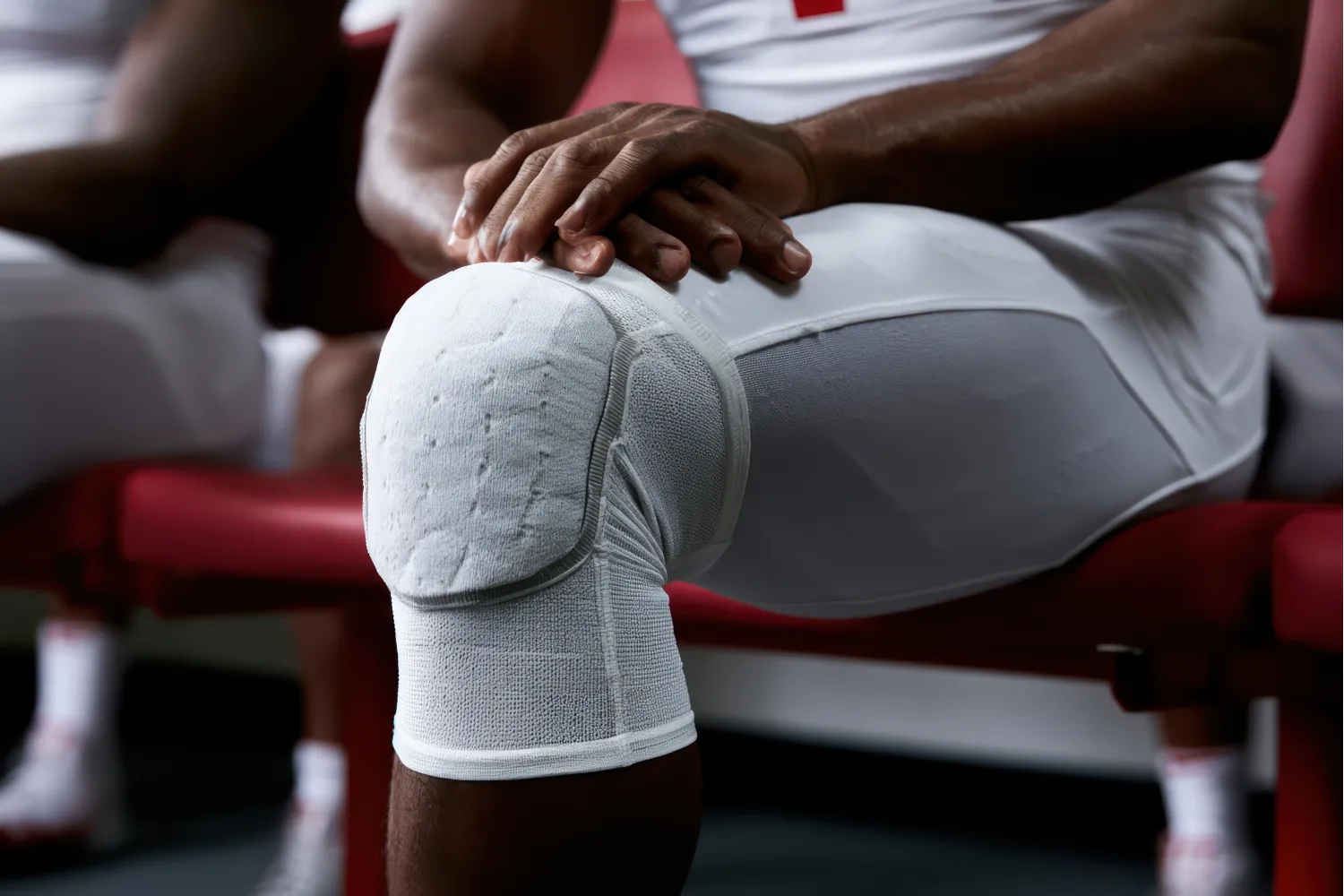
Linemen benefit most from a hinged brace that offers structured, side-to-side stability. Because of the frequency and force of contact at the line of scrimmage, this position group tends to prioritize reinforced support over flexibility.
Our hinged Natural Motion Knee Brace is built with this demand in mind. It features:
-
Maximum Support Compression to help support healthy blood flow and soothe post-practice tension
-
An anti-chafing, seamless knit construction for extended wear under pads
-
A structured design intended for players who need reinforced, side-supported stability
For instance, this kind of structured support aligns with findings from research on high-contact positions.
One study of NFL offensive linemen found that players who wore prophylactic knee bracing had a significantly lower rate of major knee injuries compared to those who did not, with no meaningful difference in on-field performance.
A separate NCAA-based analysis found a similar pattern, comparing offensive linemen who wore bilateral prophylactic knee braces to all-position injury rates across a 22-year dataset.
Best Knee Support for Skill Players
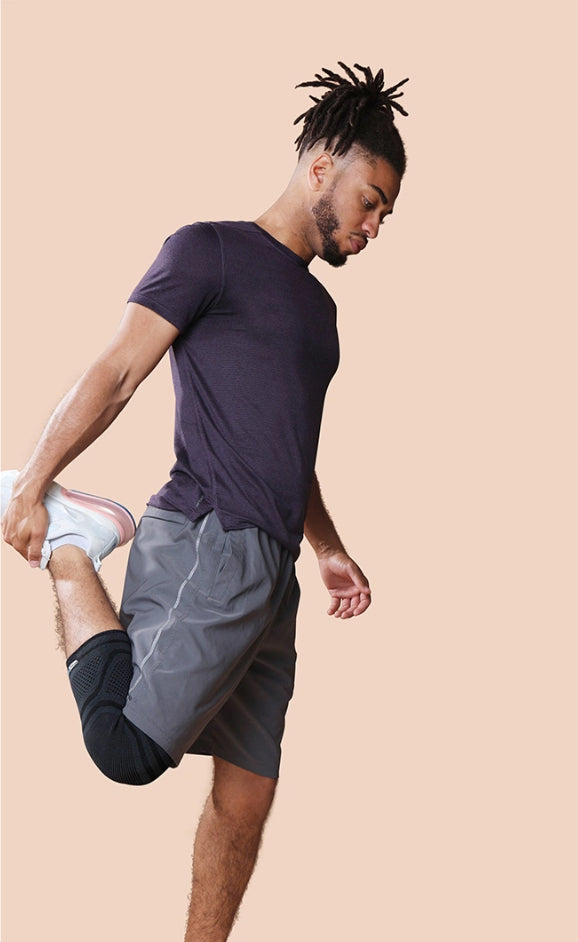
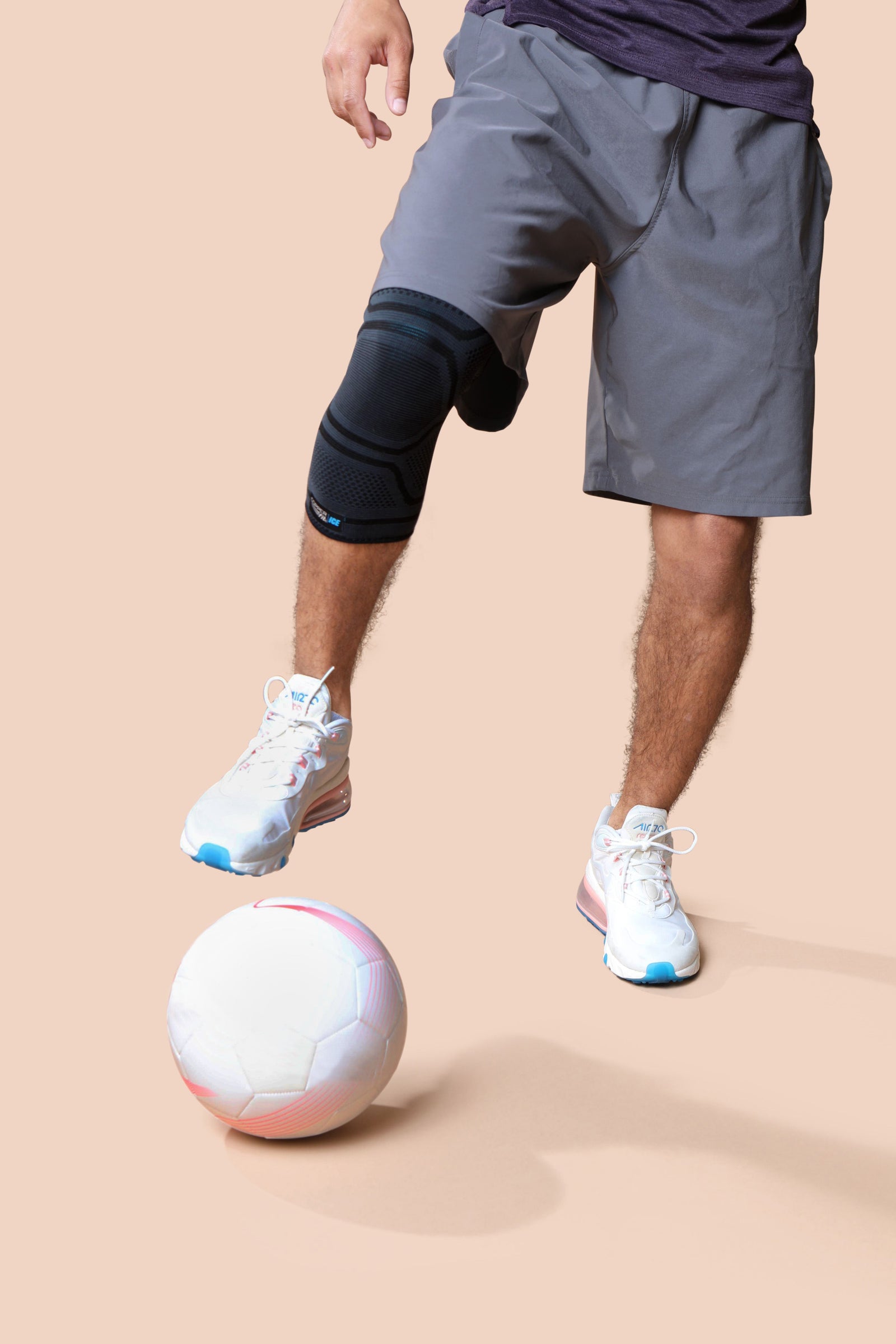
Skill players need support that moves with them. Because speed and agility are central to these positions, bulkier hinged bracing can feel restrictive during game-speed cuts and sprints.
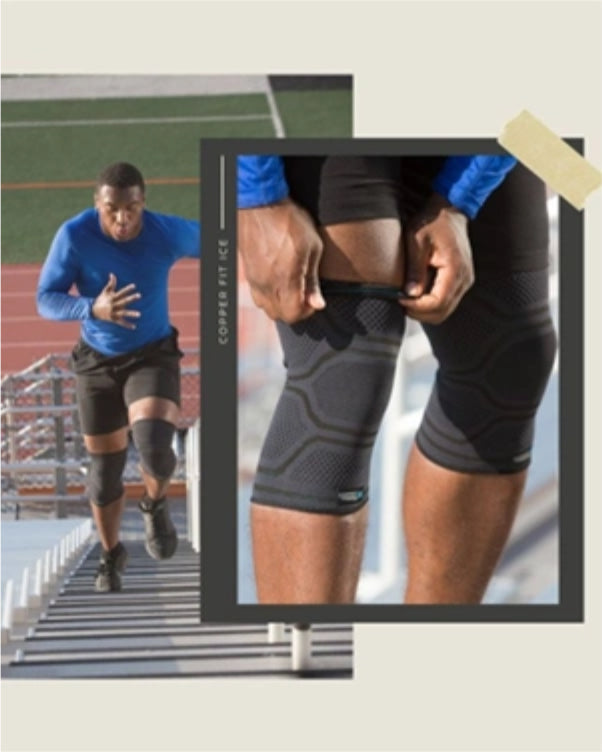
Our range of Copper Fit knee sleeves is designed for this group.
Key features include:
-
Moisture-wicking fabric to help keep skin dry through long practices and games
-
Menthol infusion to help promote a soothing, cooling sensation
-
A lightweight, gentle compression fit that helps support movement without limiting the range of motion
Compared with hinged bracing, sleeves are designed to stay out of the way while still helping to soothe tension after repeated sprinting, cutting, and jumping.
Hinged Brace vs. Sleeve: Quick Comparison
|
Feature |
Hinged Natural Motion Knee Brace |
Compression Sleeve |
|
Best for |
Linemen, high-contact positions |
Skill players, speed-based positions |
|
Support level |
Structured, side-supported |
Light, flexible compression |
|
Mobility |
Moderate |
High |
|
Typical use |
Practices and games with frequent contact |
Practices, games, and light recovery days |
Preventive Support vs. Post-Activity Use
Knee supports generally serve two purposes: prevention and recovery.
-
Preventive use means wearing a brace during practices and games before any issue arises, often to add stability during high-contact reps or repetitive movement. Research on offensive linemen has shown that this kind of proactive bracing is associated with a lower rate of major knee injuries over time.
-
For recovery, rather than focusing on stability during play, the focus is on helping the knee recover afterward, whether through compression or hot-and-cold technology for added support.
Many players use a lighter sleeve during this phase, since it's less about structural support and more about helping soothe general tension after a hard practice or game. Knowing which phase you're supporting helps determine the right product for the moment.
FAQ
Do linemen and skill players need different knee braces?
Yes. Linemen typically benefit from more structured, hinged support, while skill players usually do better with lighter compression that preserves speed and mobility.
Can I wear a knee brace during both practice and games?
Yes, many players wear compression support during both to help promote muscle relaxation and support recovery between sessions.
What's the difference between a hinged brace and a compression sleeve?
A hinged brace offers more structured, rigid support for high-contact positions, while a sleeve provides gentle, flexible compression better suited for speed and mobility.
How do I know if I need extra knee support?
If you're regularly experiencing tension or soreness after practice or games, added compression may help, though it's always a good idea to check with a coach or medical professional for personalized guidance.
The Bottom Line
Here at Copper Fit, we know football doesn't ask the same thing of every position. That's why we build our compression gear around how you actually move, not a one-size-fits-all approach.
Whether you're anchoring the line or turning upfield after a catch, our hinged and sleeve-style knee supports are designed to help you stay comfortable, stay supported, and stay in the game.
Sources: