Key Takeaways
-
High arches often mean less natural shock absorption, which can lead to instability and soreness in the feet, ankles, and legs.
-
The best insoles for high arches combine a deep heel cup, high-density cushioning, and contoured arch support to help distribute pressure more evenly.
-
Copper Fit's Arch Wave Orthotic Insoles and Air Arch Relief Plus band offer complementary ways to support your feet through the day and during activity.
If you have high arches, you already know your feet don't always get the same attention as flat feet do. But high arches come with their own set of challenges, especially if you are on your feet all day or pushing hard through workouts.
The shape of a high arch changes how weight moves across your foot, which can leave certain areas working overtime. The right insole will not fix that on its own, but it can help support your foot's natural movement and take some of the daily tension off your feet, ankles, and legs.
In this guide, we will break down what high arches actually do to your foot, what to prioritize when shopping for an insole, and a few insole picks worth considering.
What Do High Arches Do to Your Feet?
A high arch means the middle of your foot sits further off the ground than a neutral or flat foot. That structural difference changes how your foot handles impact and weight distribution, and it shows up in a few specific ways.
Supination
People with high arches tend to supinate, meaning the foot rolls slightly outward with each step instead of rolling inward to help absorb shock. Research on foot posture and gait has found that high-arched feet are typically positioned in a more supinated stance, which changes how pressure moves through the foot during movement compared to flat or neutral arches.
Ankle instability
Because a high arch does not flatten and roll the way a neutral foot does, there is less built-in shock absorption at the ankle. Research on high-arched runners has linked this foot type to higher ground reaction forces and greater stiffness through the lower leg, both of which are associated with a higher chance of ankle rolling and instability during activity.
Plantar strain
Because a high arch does not spread pressure evenly across the whole foot, more of it concentrates on the heel and the ball of the foot. A finite element analysis of different arch heights found that both stress and strain on the plantar tissue and forefoot bones were higher in high-arched feet, and forefoot pressure increased as arch height increased.
None of this means high arches are a problem to fix. It just means your feet are working differently, and giving them the right kind of support can help you stay comfortable and active rather than pushing through the tension.
What To Look for in an Insole for High Arches
Not every insole is built with a high arch in mind. Here is what actually matters when you are shopping for one.
Deep heel cup
A deeper heel cup helps cradle the heel and keep it centered with each step, supporting a more stable foot strike rather than letting the heel shift side to side.
High-density cushioning
Since high arches concentrate pressure at the heel and forefoot instead of spreading it evenly, cushioning matters more here than it does for a flatter foot.
Research on insole materials has found that softer, higher-density cushioning materials such as polyurethane and EVA foam are more effective at reducing peak plantar pressure than stiffer materials, because they absorb and disperse impact rather than letting it transfer straight through.
Contoured arch support
An insole that is molded to follow the shape of a raised arch will support the foot's natural structure rather than forcing it flat. This helps the insole make contact where your foot needs it, rather than leaving a gap under the arch.
Breathable, moisture-wicking materials
If you are wearing insoles all day or during a workout, breathability keeps things comfortable and helps manage sweat and odor during extended wear.
Copper-infused materials
Copper-infused fabric is one added feature worth looking for, since copper is well known for helping reduce odor in gear that gets heavy daily use.
Top Picks for High Arches
If you’re looking for ways to manage discomfort associated with high arches, the right insole or band can make all the difference.
Copper Fit Arch Wave Orthotic Insoles
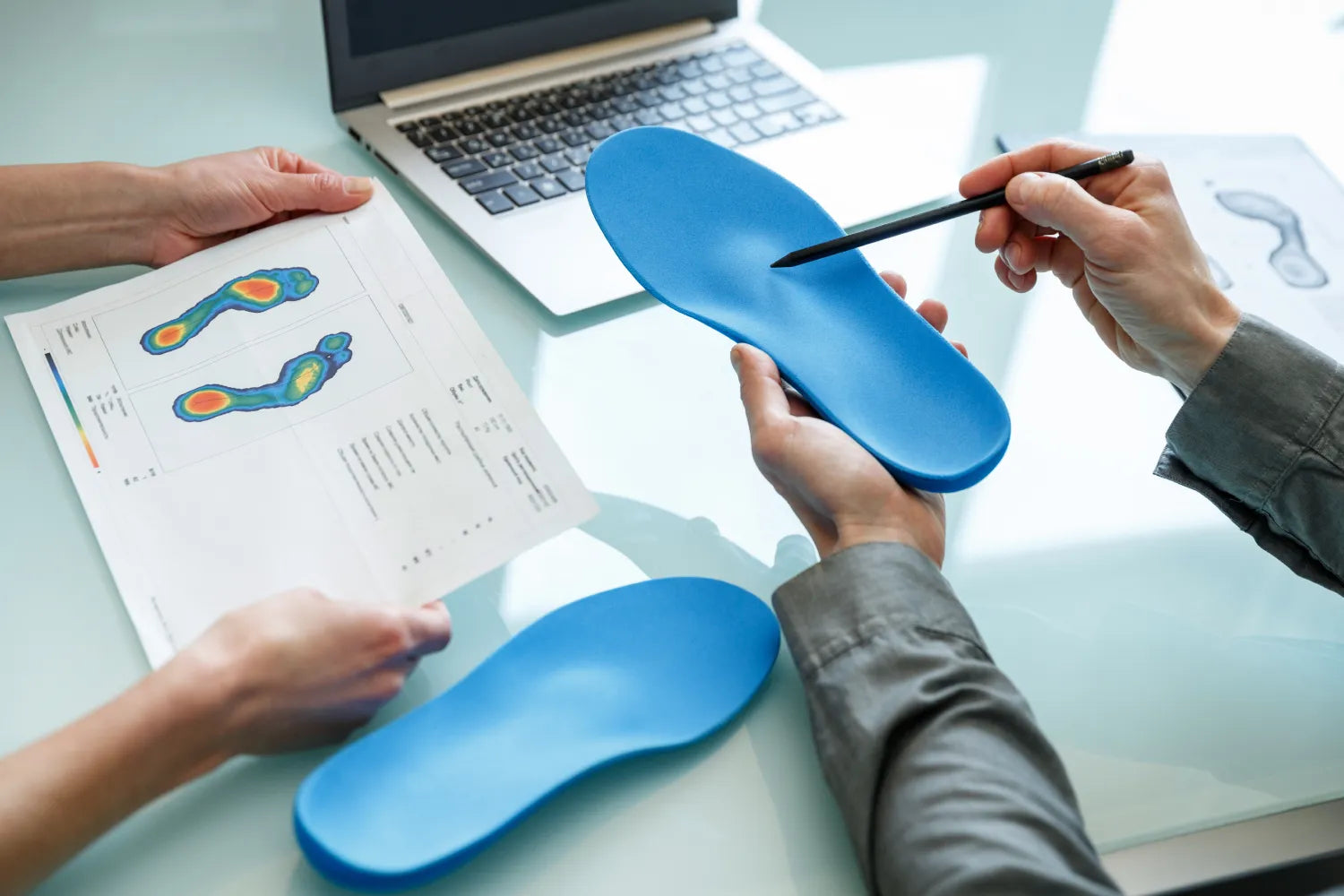
Our Arch Wave Orthotic Insoles are built around the exact features that high arches benefit from most: a contoured design that follows the arch's shape, a deep heel cup for stability, and supportive cushioning to help absorb impact throughout the day.
They are also copper-infused, which helps reduce odor during long wear, whether that is a full workday on your feet or a long training session.
Copper Fit Air Arch Relief Plus
For anyone who wants targeted support without swapping out insoles altogether, the Arch Relief Plus bands are worth a look. They use adjustable compression to help support the arch and help soothe tension that builds up from a long day of standing, walking, or training.
Some people prefer to pair a band like this with their insoles for a more layered approach to arch support, especially on high-activity days.
How To Choose the Right Fit
A few things to keep in mind as you choose:
-
Match the insole to the shoe. A running shoe, a work boot, and an everyday sneaker all fit differently, so make sure the insole you pick actually fits the shoe you are putting it in.
-
Think about your activity level. If you are on your feet for long stretches or training hard, prioritize cushioning that can handle repeated impact.
-
Replace insoles when they wear down. Cushioning breaks down with use, so an insole that felt supportive six months ago may not be doing much anymore.
-
Remember that insoles support what your foot already does. The goal is to work with your foot's natural shape and movement, not force it into something different.
FAQ
How do I know if I have high arches?
A simple way to check is the wet footprint test: wet the bottom of your foot and step onto a surface that will show the print. A high arch typically leaves little to no contact along the middle of the footprint.
Can insoles really help with high arches?
Yes. The right insole supports the arch's natural shape and distributes pressure more evenly, which can help soothe soreness caused by pressure concentrating at the heel and forefoot.
How often should I replace my insoles?
Most insoles start to lose their cushioning and support after about six months to a year of regular use, depending on activity level, so it is worth checking them periodically.
Can I use an arch support band along with insoles?
Yes. A band like the Air Arch Relief Plus can work alongside insoles for extra targeted support, particularly during longer or more demanding days on your feet.
The Bottom Line
Here at Copper Fit, we know that staying active should not mean living with constant tension in your feet. High arches change the way your body handles impact, but they do not have to hold you back. That is why we build our arch support gear, from our foot and ankle supports to work with your foot's natural shape.
Whether you are on your feet all day or training for your next event, our compression and support gear is designed to help you move with less tension and more confidence, every day.
Sources:
High Arch Feet (Pes Cavus): Causes, Symptoms & Treatment | Cleveland Clinic
Biomechanical analysis of foot with different foot arch heights: a finite element analysis | PubMed