Key Takeaways
-
Tennis elbow causes soreness and tension around the outer elbow, often from repetitive gripping or wrist motion.
-
Counterforce straps and compression sleeves serve different purposes, and many people use both depending on their activity level.
-
The Copper Fit Elbow Sleeve offers all-day compression support designed to help ease soreness and keep you moving through your day.
Whether you're mid-serve on the tennis court, gripping a wrench at work, or just trying to carry groceries without wincing, elbow discomfort can interfere with your routine. The good news is you don't have to sideline yourself to find relief.
Understanding what's happening in your elbow and distinguishing between a counterforce strap and a compression sleeve can help you choose the right support for your lifestyle.
In this guide, we'll break down the basics of tennis elbow, compare support options, and provide tips for choosing elbow braces and sleeves to keep you moving and feeling your best.
What Is Tennis Elbow?
Tennis elbow is a common term for tension and soreness that develops around the outer part of the elbow, typically where the forearm muscles and tendons attach. Despite the name, you don't need to play tennis to experience it.
It's often linked to repetitive motions like gripping, twisting, or extending the wrist, and can show up in golfers, painters, plumbers, office workers, and lifters alike. Some people may notice discomfort building gradually over weeks of repetitive movement, while others feel it more suddenly after an intense activity session.
But with the right combination of rest, technique adjustments, and support, most people can stay active while managing this kind of soreness. That's where the right brace or sleeve can make a real difference.
It's worth noting that everyone's body responds differently, and persistent or worsening soreness should always be discussed with a healthcare professional.
Counterforce Strap vs. Compression Sleeve: What's the Difference?
When it comes to elbow support, you’re likely to find two different types: the counterforce strap and the compression sleeve. They're not interchangeable, and understanding how each works will help you figure out what your elbow actually needs.
How a Counterforce Strap Works
A counterforce strap or brace is a narrow band that wraps around the forearm, just below the elbow joint. Instead of covering the elbow itself, it applies targeted pressure to the forearm muscles.
The idea is to redistribute the tension that would otherwise concentrate directly on the irritated tendon, helping to ease the load during repetitive movements like swinging a racquet, gripping a golf club, or using hand tools.
Straps are typically designed for active, task-specific use. Many people put them on right before an activity that tends to aggravate their elbow and take them off afterward.
How a Compression Sleeve Works
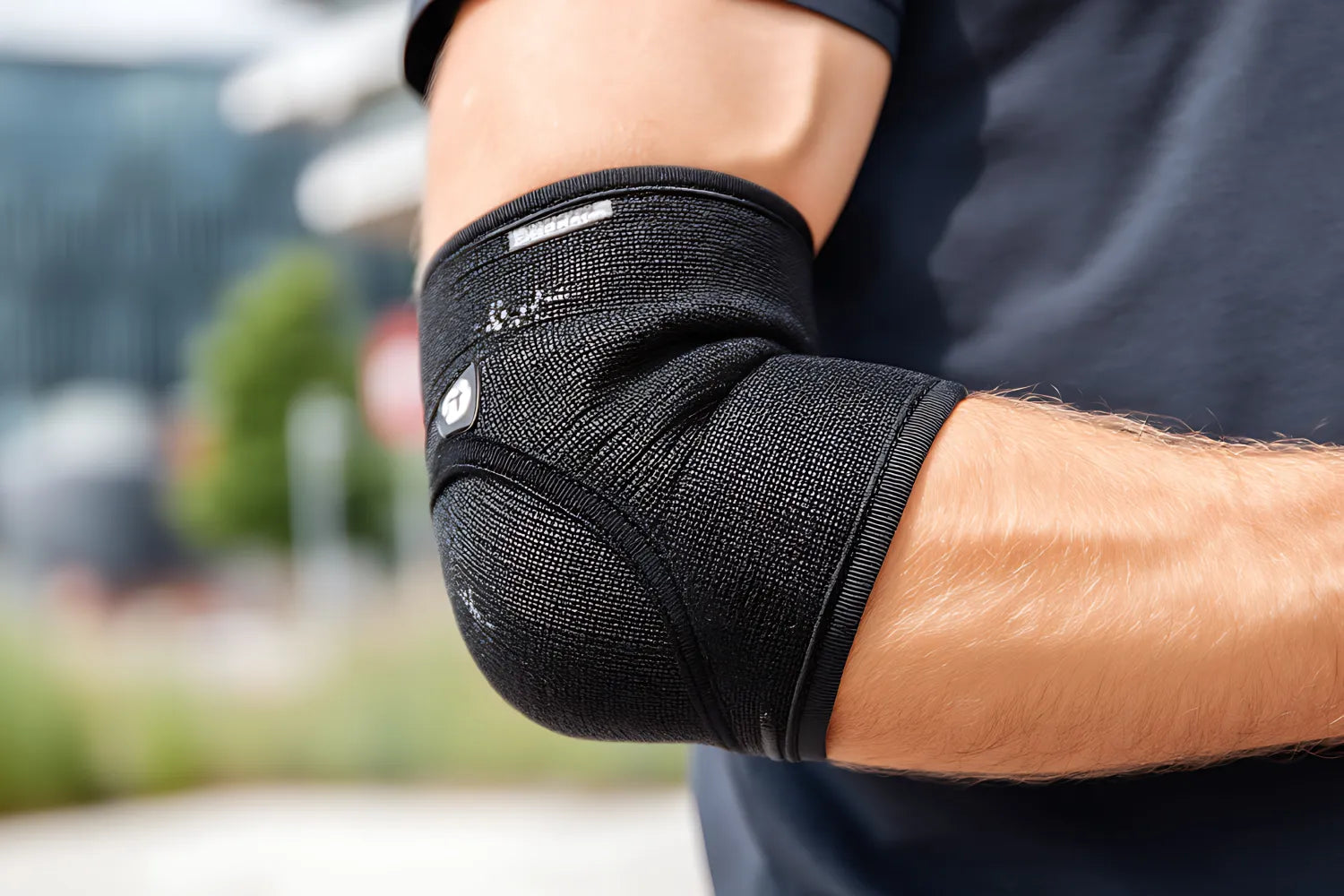
A compression sleeve, on the other hand, covers the entire elbow joint. Rather than isolating pressure to one spot, it provides consistent, even compression across the whole area. This type of support is designed to help support healthy blood flow, ease muscle soreness, and provide a comforting, secure feeling throughout the day.
Sleeves are generally built for extended wear. Many are made with moisture-wicking, seamless materials so they can be worn during workouts, at work, or even while relaxing at home without feeling bulky or restrictive.
When Each One Helps Most
Choosing between a strap and a sleeve often comes down to what you're doing and when you're feeling the most tension.
Straps tend to work well for:
-
High-repetition activities like tennis, golf, or racquet sports
-
Manual labor involving gripping tools or equipment
-
Short bursts of targeted support during a specific task
Sleeves tend to work well for:
-
All-day comfort and coverage
-
General activity support, from workouts to daily errands
-
Post-activity recovery, when you want soothing compression without needing to isolate one point of pressure
Many people find that combining both offers the most complete support. For example, wearing a compression sleeve throughout the day for general comfort, then adding a strap during a tennis match or a home improvement project, can offer targeted relief exactly when it's needed most.
Top Picks for Elbow Support
When choosing an elbow brace, strap, or sleeve, it's important to consider your daily needs and wellness goals.
Here are some of our go-to picks.
Ice Compression Elbow Sleeve
The Ice Compression Elbow Sleeve is menthol-infused, so it delivers a cooling sensation the moment you put it on. That makes it a great choice for anyone whose elbow tends to feel warm or worked up after activity, whether that's a tennis match, a workout, or a long day of repetitive movement.
Pro Series Compression Elbow Sleeve
The Pro Series Compression Elbow Sleeve features embedded kinesiology bands that provide targeted compression right where tennis elbow tends to build tension, making it ideal for activity-specific support.
Its ultra-soft, breathable material offers a second-skin feel, so it moves with you during swings, lifts, or repetitive gripping motions. This sleeve is ideal for athletes and active adults who want dynamic, focused support layered into their everyday compression sleeve.
Rapid Relief Stabilizing Wrist Brace
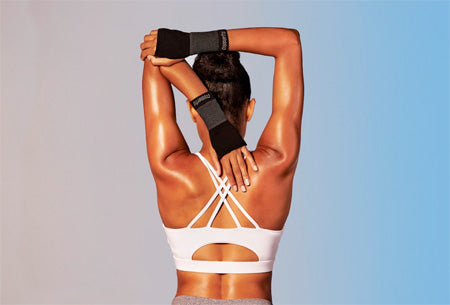
Because tennis elbow often involves the muscles and tendons that run into the wrist and forearm, the Rapid Relief Stabilizing Wrist Brace is a helpful addition to your routine. It features a removable gel pack that can be used hot or cold, along with adjustable straps for a customized fit.
Use it cold after a fresh bout of activity, or switch to heat for lingering soreness that has stuck around for more than a day. It's a great option for anyone who wants stabilizing support alongside their elbow sleeve.
Tips for Choosing the Right Fit
Getting the right fit matters just as much as choosing between a strap and a sleeve.
Here are a few tips to keep in mind:
-
Measure your forearm circumference. Most sizing charts are based on this measurement, so take an accurate one before ordering.
-
Think about your primary activity. If you need targeted support during specific movements, a strap may be the better starting point. If you want general, all-day comfort, a sleeve is likely the way to go.
-
Prioritize breathable, seamless materials. Especially if you plan to wear your support for extended periods, moisture-wicking and anti-chafing fabric will make a noticeable difference in comfort.
-
Don't be afraid to layer. As mentioned above, using a sleeve and a strap together isn't unusual, and many people find it gives them the best of both worlds.
Tips for Managing Elbow Discomfort
An elbow sleeve works best as part of a broader routine. Alongside your support gear, try easing into activity with a proper warm-up, and stretch the forearm muscles before and after repetitive tasks. Take short breaks during high-repetition activities like tennis or typing to give the area a rest.
Icing after activity and applying heat before movement can also help keep things loose. Finally, pay attention to your grip and form, since small technique adjustments often make a big difference in reducing ongoing tension.
FAQ
What's the difference between a strap and a sleeve for tennis elbow?
A strap targets a specific point on the forearm to redistribute tension, while a sleeve provides even compression across the entire elbow joint for all-day support.
Can I wear a compression sleeve all day?
Yes, compression sleeves like the Copper Fit Elbow Sleeve are designed with breathable, seamless materials specifically for extended, comfortable wear.
Should I use hot or cold therapy with an elbow sleeve?
Heat therapy is generally used for soreness that has lasted longer than a day, while cold therapy is better suited for recent strain or irritation. Many people use a sleeve for daily support and add hot or cold therapy as needed.
How do I know if my elbow brace fits correctly?
A properly fitted brace or sleeve should feel snug and secure without cutting off circulation or bunching up during movement. If it slides around or feels too tight, try adjusting the size or strap tension.
The Bottom Line
Here at Copper Fit, we know how frustrating it can be when elbow soreness gets in the way of the activities you love, whether that's a weekend tennis match, a day at the gym, or just getting through your daily routine comfortably. That's why we design our compression sleeves to offer dependable, all-day support without holding you back.
Our Elbow Sleeves combine seamless, anti-chafing construction with compression designed to help soothe tension and support circulation, so you can keep moving through your day with confidence. Whatever your activity level, we believe support and comfort should never be an afterthought.
Explore our full range of elbow sleeves and braces to find the support you need to stay in motion.
Sources:
Tennis Elbow (Lateral Epicondylitis): Treatment & Symptoms | Cleveland Clinic
Ice pack or heating pad? What works best for athletic injuries | Stanford University