Key Takeaways
-
Compression socks use graduated pressure, tighter at the ankle and looser toward the calf, to help support healthy blood flow during and after a run.
-
mmHg (millimeters of mercury) measures compression strength, and most runners do well in a light-to-moderate range rather than reaching for the highest number on the shelf.
-
Fit matters as much as mmHg. A sock that bunches, slips, or feels restrictive behind the knee will not deliver the support runners are looking for, no matter how it is rated.
Runners chase every edge they can find, with better shoes, smarter pacing, and dialed-in nutrition. The socks on their feet often get overlooked, even though they sit closer to the work than almost anything else in a training routine.
This guide breaks down what compression socks actually do, what those mmHg numbers on the packaging really mean, and how to choose a pair that matches your training rather than just grabbing the highest compression rating you can find.
Whether you are training for your first 5K or logging serious weekly mileage, understanding the basics will help you get more out of every pair you own.
What Compression Socks Actually Do for Runners
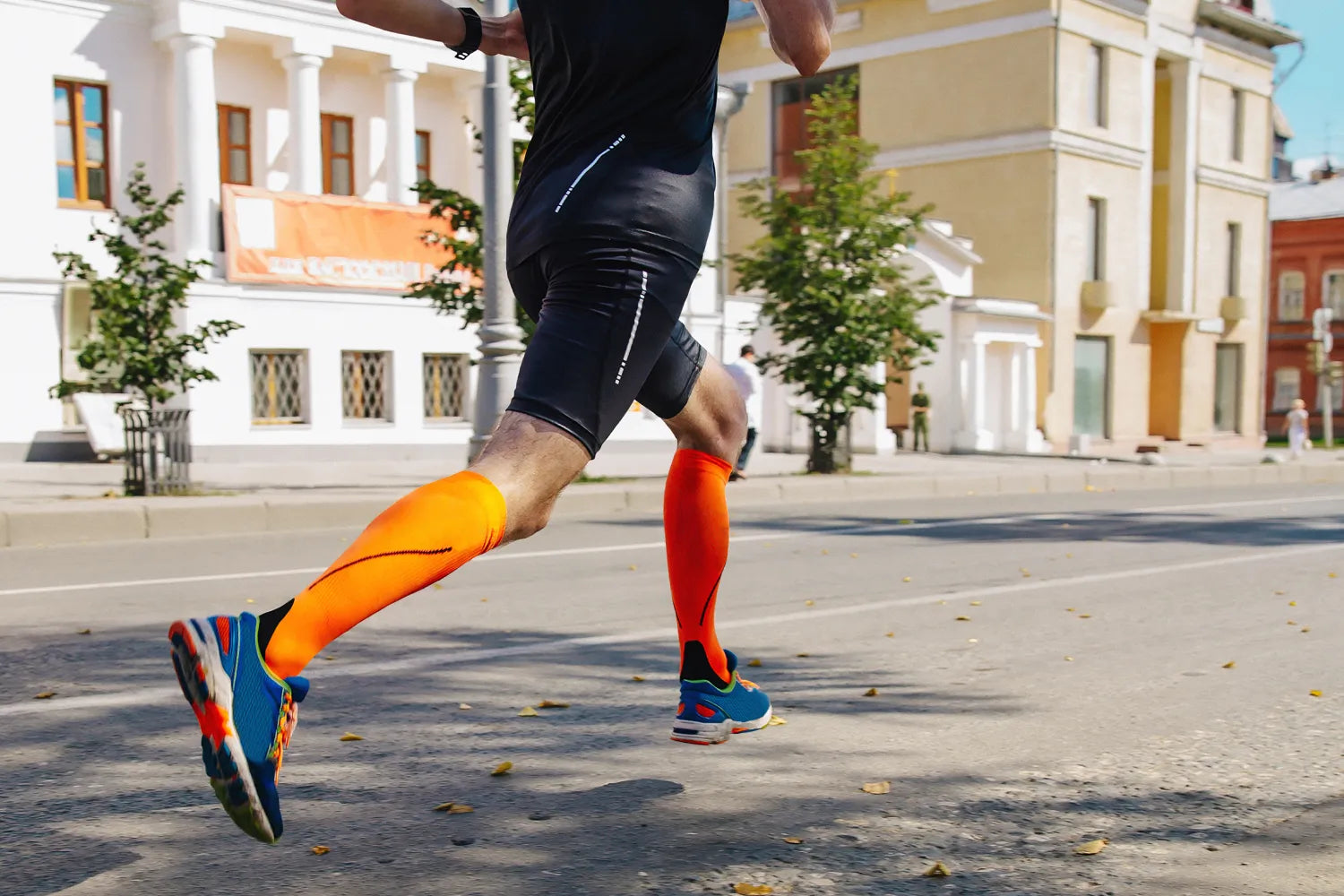
Compression socks work through graduated compression, meaning the fabric applies the most pressure at the ankle and gradually eases up toward the calf. That gradient is designed to help support healthy blood flow as it moves back up the leg, which plays a role in how your legs feel both during a long run and in the hours after you finish.
The benefits generally fall into two categories. During a run, compression socks help promote muscle stability and may help take the edge off that heavy, sluggish feeling that tends to show up in the later miles. After a run, they help support recovery by supporting circulation while your legs rest, which many runners find useful heading into the next day's training.
Beyond compression itself, most running-specific socks bring a few everyday comforts to the table. Moisture-wicking fabric helps manage sweat over long distances, and copper-infused materials are increasingly common for their odor-reducing properties.
None of this replaces good training or proper rest, but it is a small, low-effort addition that supports the work you are already putting in.
Understanding mmHg: What the Numbers Mean
Every pair of compression socks lists a number range followed by "mmHg," which stands for millimeters of mercury. This is simply the unit used to measure how much pressure the sock applies to your leg. The higher the number, the firmer the compression.
Here is a general breakdown of what you will typically find:
-
8–15 mmHg (light): This is a gentle starting point, often used for everyday wear, travel, or general comfort. It is a reasonable place to begin if you are new to compression and want to see how your legs respond.
-
15–20 mmHg (mild to moderate): According to running sock specialists at Vim & Vigr, runners are generally best served by moderate compression in this range during exercise, as it provides meaningful graduated support without feeling overly restrictive.
-
20–30 mmHg (firm): Many runners shift into this firmer range specifically for recovery, travel, or extended periods of standing, such as waiting around before a race. Runners logging higher weekly mileage or working through calf soreness often gravitate toward this level once they are used to how compression feels.
The most important thing to understand is that higher is not automatically better. The right mmHg depends on your activity level, how long you plan to wear the socks, and simple personal comfort.
If you are trying compression for the first time, start on the lighter end of the range and adjust from there based on how your legs actually feel, not just what the packaging promises.
Choosing the Right Pair: Fit, Height, and Features
Once you have a general mmHg range in mind, the next decisions come down to height, fit, and features.
Consider the Fit
A properly sized compression sock should feel snug and supportive without pinching behind the knee or bunching at the ankle. Sizing should be based on calf and ankle measurements rather than shoe size alone, so it is worth checking a brand's specific sizing chart before you buy.
As running sock guides frequently point out, a loose sock will not maintain the pressure gradient, and an overly tight one can feel restrictive rather than supportive.
Knee-high versus Ankle Length
Knee-high compression socks cover more of the calf and are a favorite for long runs, race days, or travel, when your legs are on their feet or in transit for extended stretches. Ankle-length options are lighter and more breathable, making them a solid choice for shorter runs or warmer weather, while still delivering targeted support through the arch and ankle.
Added Features
Look for arch support technology that helps reduce foot and leg fatigue on impact, moisture-wicking fabric to manage sweat over long miles, and a seamless or anti-chafe construction so the sock does not become a distraction mid-run.
An easy-on, easy-off design is also worth considering, especially for the moments right after a hard effort when your legs are tired and patience is short.
Copper Fit's Energy Compression Socks offer graduated compression, arch support technology, and moisture-wicking fibers, with copper infused into the fabric to help reduce odor. They are available in knee-high, crew-length, and ankle styles, making it easier to match the sock to the type of run or day ahead.
When To Wear Them: Training, Racing, and Recovery Days
Compression socks can fit into a running routine in more than one way. Some runners wear them as part of a warm-up for the supportive, locked-in feel before a workout. Others wear them during long runs or races, where they help promote muscle stability over distance.
If you are planning to wear compression socks on race day, it is worth testing them during training runs first rather than trying them for the first time on race morning.
Recovery days are where compression socks tend to earn their place in a runner's routine. Wearing them after a hard effort or long run helps support circulation while your legs are resting, which is often when runners notice the biggest difference.
Travel days are another practical use case. Long flights or drives to and from a race often involve sitting still for extended periods, and compression socks can help support circulation during that time.
Consistency tends to matter more than perfection here. Wearing compression socks regularly during your recovery windows, rather than saving them only for your toughest sessions, is generally more useful for staying ahead of tension and fatigue over a full training cycle.
FAQ
Should I wear compression socks during my run or only after?
Both approaches work. Some runners wear them during runs for extra stability and support, while others save them for after to help support recovery while their legs are resting. It often comes down to personal preference and what feels best over the miles.
What mmHg is best for running?
Most runners do well in the 15–20 mmHg range, which provides meaningful graduated support without feeling overly restrictive. Beginners should start lighter and adjust based on comfort.
Are knee-high or ankle compression socks better for runners?
Knee-high socks cover more of the calf and are popular for long runs or travel days, while ankle-length options are lighter and better suited to shorter runs or warmer weather. Both styles can deliver targeted support through the arch and ankle.
How often should runners wear compression socks?
Many runners wear them after long runs, hard workouts, or travel days to help support circulation during recovery. Wearing them consistently, rather than only occasionally, tends to be more useful for staying ahead of tension and fatigue.
The Bottom Line
At Copper Fit, we know recovery is an important part of the work, just as much as the miles you log or the pace you hold. We know the cycle every runner has felt: legs that get heavy late in a run, tension that lingers into the next morning, the hesitation to lace back up before you feel ready.
Our copper-infused compression socks combine graduated compression, arch support technology, and moisture-wicking, copper-infused fabric to help support your legs during effort and as they recover.
The right mmHg and the right fit are personal choices, but the goal is the same for every runner: fewer setbacks, more consistency, and the ability to keep moving toward whatever you are training for.
Sources:
Graduated compression stockings | PMC
Wearing compression socks during exercise aids subsequent performance | ScienceDirect