Key Takeaways
-
Sleeves and lace-up braces serve different jobs. One supports circulation and everyday comfort, the other adds structured stability on uneven or demanding terrain.
-
Trail runners generally face a higher risk of ankle sprains than road runners because of roots, rocks, and uneven footing.
-
The right brace depends on terrain, mileage, and how your ankle already feels after a run, not a one-size-fits-all answer.
Running can put a lot of pressure on your ankle, no matter where you run. Whether you’re dodging roots on the trail or racking up miles on the road, every stride sends force straight through your ankle.
The right ankle brace can help stabilize this joint, support recovery, and aid in injury prevention. The trick is knowing which type of support actually matches how and where you run.
In this guide, we will break down the difference between compression sleeves and lace-up braces, help you figure out when light support is enough versus when to size up, and walk through a few standout picks for runners.
Why Runners' Ankles Need Extra Support
Every runner's ankle absorbs thousands of footstrikes over the course of a single run, and that demand looks different depending on the surface. Road running is repetitive and largely one-directional, while trail running adds constant, unpredictable variables.
Trail runners in particular face uneven terrain that requires strong foot stability and postural control with every step, and research shows running on uneven surfaces increases stride variability and leg stiffness compared to running on smooth ground, both signs of the extra demand placed on the lower leg.
That added demand shows up in the injury data, too. Acute ankle sprains are consistently reported as one of the most common injuries among trail runners, largely due to the uneven terrain, as hills, roots, and variable footing alter how the body absorbs force compared to road running.
While your body is built to stabilize and recover on its own, the right support can help that natural process along, giving your ankle a bit of extra structure when the terrain, or the mileage, asks more of it.
How Can An Ankle Brace Help Runners?
An ankle brace can provide added stability during your run or help your ankle recover afterward. Worn during a run, the right brace helps keep your ankle supported and stable (without limiting mobility), to reduce the risk of rolls and sprains as you move.
Worn after a run, the gentle compression can support healthy blood flow, soothe tension, and support your body's natural recovery. Some runners wear light compression daily as a proactive habit, while others reach for more structured support only on demanding trail days or when returning from time off.
Sleeve vs. Lace-Up Brace: What's the Difference?
When choosing an ankle support, you’ll find compression sleeves, wraps, and braces.
Compression Sleeves
Compression sleeves offer a snug, second-skin fit. They support healthy blood flow to the area without restricting your natural range of motion, making them a comfortable option for everyday miles.
Research on compression garments has linked healthy blood flow during the post-exercise recovery period with better recovery of exercise capacity. A sleeve is built to work with your stride, not against it.
Lace-Up Braces
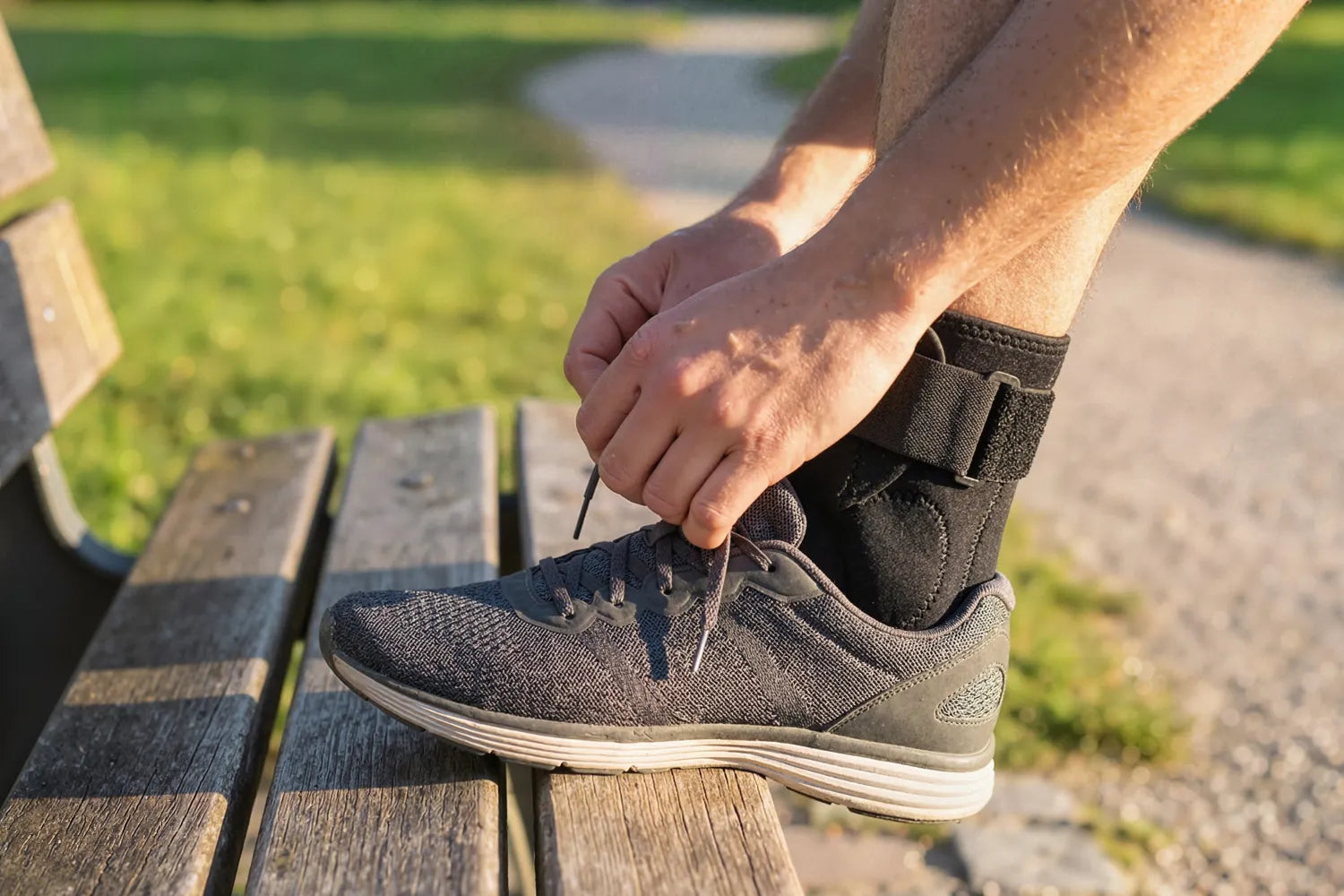
Lace-up ankle braces or stabilizer-style braces go a step further. These typically include structured side supports and adjustable straps that help maintain joint stability during lateral movement, such as the quick adjustments your foot makes on a rocky descent or an off-camber trail. They are built for moments when your ankle needs more than compression alone can offer.
Neither option is inherently better. The right choice comes down to what your specific runs demand.
When Compression Is Enough vs. When To Escalate
Compression is usually enough if:
-
You mostly run on roads, tracks, or groomed paths with consistent, predictable footing
-
You are dealing with general end-of-run tension or soreness rather than instability
-
You want proactive, everyday support and have no history of rolled ankles
It may be time to size up to a stabilizer if:
-
You run technical trail terrain with roots, rocks, or steep, uneven descents
-
You have a history of ankle sprains or lingering instability
-
You are increasing mileage or intensity and want extra reinforcement while you build back up
Ankle proprioception and stability tend to matter more for trail runners navigating technical terrain, where acute sprains are more common, while ankle mobility plays a bigger role for road runners logging repetitive miles.
If you are just getting into trail running, easing in with a stabilizer while your balance and strength catch up to the terrain is a smart, low-stress way to start.
Top Ankle Support Picks for Runners
Not sure which option is right for you? Here are a few of our go-to picks for runners.
Health Compression Ankle Sleeve
The Health Compression Sleeve features adjustable Figure-8 straps that conform to your ankle and foot, a thin, contoured profile that fits easily inside running shoes, and a seamless, anti-chafing knit. Best for: road runners and everyday training miles.
With moisture-wicking and copper-infused materials to help reduce odor, this sleeve is the perfect everyday layer for road runners who want light, consistent support without added bulk.
Pro Series Compression Ankle Sleeve
The Pro Series Compression Ankle Sleeve is ideal for runners who want more targeted support without stepping up to a lace-up brace. This sleeve is built with kinesiology bands for light to medium targeted compression, an ultra-soft, second-skin feel, and 4-way stretch for a full range of motion.
It is a strong middle-ground option for runners managing tension or seeking added injury protection while still wanting to feel mobile and light on their feet.
Rapid Relief Ankle & Foot Wrap
The Rapid Relief Ankle Wrap is best suited for post-run recovery. It’s anatomically designed wrap delivers hot or cold therapy with a removable, pliable gel pack.
Cold therapy is typically best for a fresh tweak or recently strained ankle, while heat therapy is generally more useful for lingering tension a day or more out. It is a smart way to wind down after a hard trail day or a long tempo run.
Copper Fit AIR Ankle Stabilizer
Our Copper Fit AIR Ankle Stabilizer includes flexible side supports and adjustable upper and lower straps for a customizable, locked-in fit, making it perfect for trail runners and anyone tackling uneven or technical terrain who wants more structure. It is reversible for left or right foot and built for an easy-on, easy-off routine before hitting the trailhead.
Building a Complete Ankle-Care Routine
A brace is a great tool, but it works best as part of a bigger routine. Strength training, proper footwear, mobility work, and gradually building up exposure to technical trails all play a role in preventing injury and building resilience over time.
Warming up before a run is also one of the key recommendations for reducing overall injury risk, regardless of terrain. Think of your brace as one piece of a bigger plan that also includes smart training progression, good footwear for the terrain you are on, and real rest between hard efforts.
FAQ
Can I wear a compression sleeve for trail running, or do I need a stabilizer?
Light or moderate trail terrain can be fine with a sleeve, but technical routes with roots, rocks, or steep descents usually call for the added structure of a stabilizer.
Should I ice or heat my ankle after a long run?
Cold therapy is typically best for a fresh tweak or a recently strained ankle, while heat therapy is generally better suited for lingering tension that has been around for a day or more.
Do I need ankle support if I have never had an issue before?
Many runners proactively wear light compression, especially on trail days or high-mileage weeks, to help maintain stability before any discomfort shows up.
Can I wear a brace every single day?
Yes. Many runners rotate a lightweight sleeve for daily training miles and switch to a more structured brace for trail days, long runs, or races.
The Bottom Line
At Copper Fit, we believe your gear should match your miles, not slow them down. Whether that means a compression sleeve for everyday road runs, an AIR Ankle Stabilizer for technical trail days, or a Rapid Relief wrap to help you recover between sessions, our goal is simple: help you stay supported, stay moving, and keep showing up for every run ahead.
Sources: