Key Takeaways
-
A back brace won't treat a herniated disc, but the right one can help support the lower back and encourage better posture during daily activities.
-
Look for adjustable compression, breathable materials, and hot/cold therapy options when choosing a brace.
-
Pairing a supportive brace with movement, stretching, and rest can help ease tension as part of an active lifestyle.
If you're dealing with a herniated disc, finding the right back brace can make a real difference in how you move through your day. The best options combine adjustable compression, breathable materials, and hot or cold therapy so that you can customize support to your body's needs.
Below, we'll break down what a herniated disc actually is, what to look for in a brace, and other habits that can help support a more comfortable, active lifestyle.
What Is a Herniated Disc?
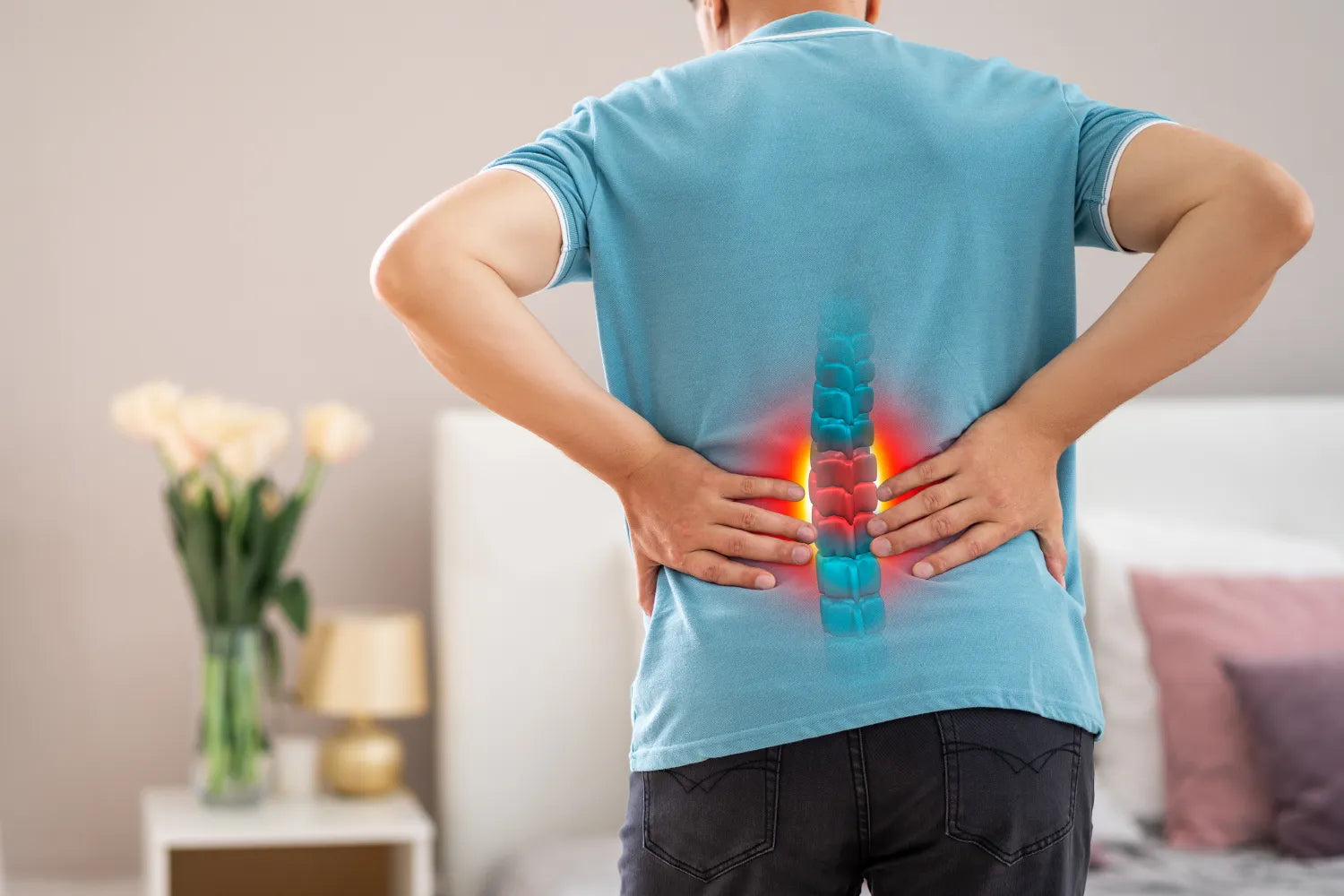
A herniated disc happens when the soft, cushion-like material between the bones of the spine pushes out of place, sometimes putting pressure on nearby nerves. This means the affected area may feel stiff, tender, or tense during certain movements, especially bending or lifting.
Herniated discs are surprisingly common, with an estimated 5 to 20 cases per 1000 adults annually, most often occurring between the ages of 30 and 50. The vast majority of cases occur in the lower back. For instance, someone who spends long hours sitting at a desk or lifting incorrectly may be more likely to experience this kind of strain.
What Can Cause a Herniated Disc?
Risk factors for disc herniation include physically demanding or high-stress occupations, obesity, and medical comorbidities such as diabetes, high cholesterol, and a history of smoking.
This means that repetitive strain, poor lifting habits, and prolonged sitting can compound these underlying risk factors over time. Be cautious of ignoring early signs of stiffness or tension, as addressing habits early on may help support a healthier back long-term.
Can a Back Brace Help Support a Herniated Disc?
While a back brace will not treat or reverse a herniated disc, it can help support proper posture and provide a stabilizing layer of compression during everyday movement and activity.
Researchers have found that wearing an abdominal or lumbar belt can increase intra-abdominal pressure, which in turn can support lumbar spine stability . In practical terms, the added compression can serve as an external cue to the trunk, reinforcing a more supportive posture during activities, such as lifting, bending, or prolonged sitting.
If you're dealing with ongoing back tension, it's best to consult a healthcare provider for a full evaluation. In the meantime, many people find that a supportive brace, paired with other healthy habits, helps them stay comfortable and active.
What To Look for in a Back Brace
When shopping for a back brace , prioritize features that balance comfort and daily wearability.
Here's what to consider:
-
Adjustable compression for a fit that can be customized throughout the day
-
Breathable, anti-chafing material for extended wear without irritation
-
Hot and cold therapy compatibility for versatile use
-
Moisture-wicking fabric that holds up during activity or workouts
-
An ergonomic design that supports the lower back without restricting movement
Many everyday back supports are built specifically for people who want to stay active while still getting extra stability where they need it.
Other Tips for Easing Back Tension
In short, a brace works best as one piece of a broader routine.
Other habits that may help support a healthier back include:
-
Practicing good posture , especially when sitting for long periods
-
Using proper form when lifting, bending at the knees rather than the waist
-
Staying gently active with low-impact movement like walking or stretching
-
Prioritizing rest and recovery after physical activity
Research also supports the use of temperature-based therapy for easing back discomfort. A Cochrane systematic review found that heat wrap therapy significantly reduced discomfort after 5 days of use compared to a placebo, and noted that heat therapy is associated with pain relief, increased blood flow, and increased tissue elasticity.
A back brace that offers heat therapy, such as our Raid Relief Stabilizing Back Support , can offer added comfort and relief.
Frequently Asked Questions
Can a back brace fix a herniated disc?
No. A brace does not treat the underlying disc issue, but it may help support posture and stability during daily activities.
When should I use hot vs. cold therapy for back tension?
Cold therapy is typically used for recent strain or soreness, while heat therapy is generally better suited for tension that has been present for a day or longer.
Can I wear a back brace all day?
Many adjustable supports, like Copper Fit's Rapid Relief Back Support, are designed for all-day wear, but it's still a good idea to take breaks and listen to your body.
Sources:
Herniated disk - Symptoms and causes | Mayo Clinic
Disk Herniation - StatPearls | NCBI Bookshelf
Mechanisms and efficacy of heat and cold therapies for musculoskeletal injury | PubMed