Key Takeaways
-
Compression gloves help support healthy blood flow, promote muscle relaxation, and soothe everyday hand discomfort, making them a practical tool for athletes, active adults, and anyone whose hands work hard throughout the day.
-
Not all compression gloves are built the same. Fit, compression level, and fabric technology all impact how effective a pair will be.
-
Copper Fit compression gloves are designed for real life, combining copper-infused odor control, Sure Grip Technology, and ICE cooling innovation to support whatever your day demands.
Compression gloves apply gentle, steady pressure to the hands to help support circulation, promote muscle relaxation, and ease everyday discomfort, making them a go-to tool for athletes, active adults, and anyone whose hands take a beating during daily life.
If you've ever wondered how compression gloves actually work, which brand is worth your money, or whether they're right for your situation, this guide covers it all.
How Do Compression Gloves Work?
Compression gloves work by applying consistent pressure to the hands, which helps support healthy blood flow through the veins and arteries. That steady circulation helps deliver oxygen and nutrients to hand muscles, which in turn supports recovery and overall hand health.
The science here is rooted in compression therapy: when gentle pressure is applied to a specific area of the body, it supports the circulatory system's ability to move blood efficiently. Research shows that compression garments can support venous return and muscle blood flow , which matters for recovery and comfort during and after physical activity.
Beyond circulation, the continuous pressure of a compression glove also acts as a physical cue for your muscles to release tension.
What Are the Key Benefits of Compression Gloves?
Compression gloves offer several practical benefits for hand health and daily comfort.
Here is a closer look at what they can do:
-
Help support healthy blood flow. The steady pressure maintains healthy circulation, which supports the delivery of oxygen and nutrients to muscles and helps flush out waste products, such as lactic acid, that can cause soreness.
-
Help promote muscle relaxation. Consistent compression serves as a physical signal to the muscles to release built-up tension, soothing stiffness and fatigue.
-
Help soothe discomfort and tension. Whether from repetitive activity, an active lifestyle, or simply a long day of use, compression gloves can help take the edge off hand soreness and tightness.
-
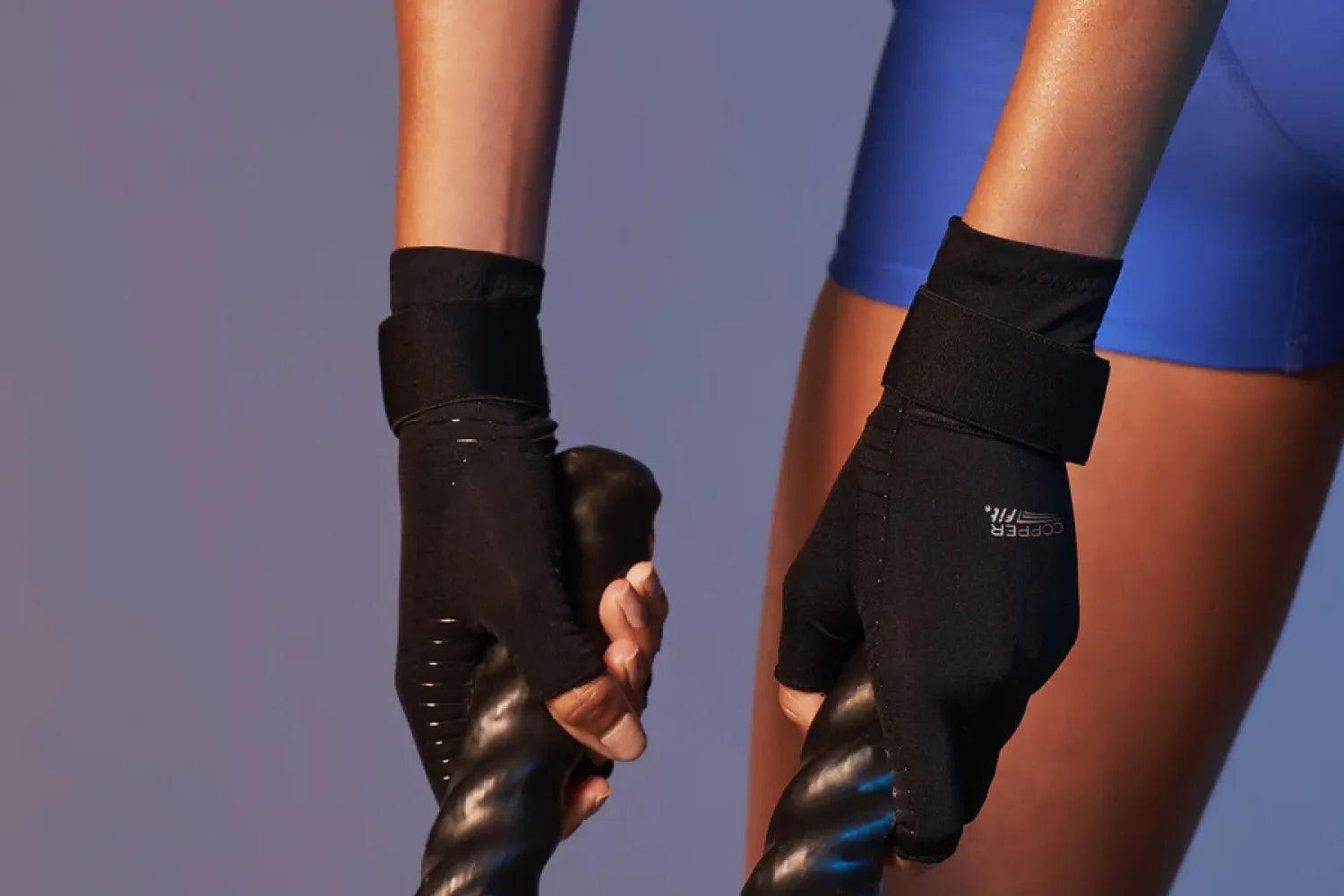
Support grip and confidence. Some compression gloves, like those from Copper Fit, feature non-slip silicone technology to support grip during everyday tasks like carrying, driving, or opening jars.
-
Help control odor. Copper-infused fabrics are clinically proven to reduce odor, keeping your gloves fresher, longer.
Who Should Use Compression Gloves?
Compression gloves are a great fit for a wide range of people. You do not have to be a competitive athlete to benefit from them.
Athletes and Active Individuals
Athletes who rely on their hands, from weightlifters and tennis players to cyclists and rock climbers, can use compression gloves to support their muscles during training and soothe soreness during recovery.
People Engaging in Repetitive Activities
Whether you have a desk job or a working-with-your-hands type of hobby, compression gloves can be a game changer. When your hands are involved in repetitive tasks (think typing, knitting, gardening, or cooking), they can benefit from the steady support compression provides throughout the day.
People Managing Hand Discomfort
If you experience hand discomfort related to stiffness, tension, or reduced circulation (more on specific experiences below), you may find that compression gloves can make daily life more comfortable and manageable.
In short, if your hands work hard, compression gloves give them support to keep going.
Compression Gloves for Specific Hand Experiences
Next, let's explore how compression gloves may help people experiencing three common hand conditions: the stiffness and tension of arthritis, the numbness and tightness of carpal tunnel syndrome, and the circulation challenges of Raynaud's phenomenon.
Arthritis-Related Hand Stiffness and Tension
For people living with arthritis, hand stiffness, swelling, and tension can make even routine tasks feel like a serious challenge. Compression gloves are not a treatment for arthritis, but they may help ease the everyday discomfort that comes along with it.
The gentle pressure of a compression glove helps support circulation in the hands, which can contribute to greater warmth and relief. The compression also helps promote muscle relaxation, which may reduce that tight, achy feeling many people experience, especially in the morning or after periods of inactivity.
For instance, a pair of copper-infused, moisture-wicking gloves worn during light activity or around the house may help take the edge off tension and make movement feel a little more manageable throughout the day.
Carpal Tunnel-Related Numbness and Tightness
Carpal tunnel syndrome is characterized by numbness, tingling, and tightness in the hands and wrists and is often caused or worsened by repetitive hand and wrist movements. Wearing compression gloves can help support the surrounding muscles and soft tissue, which may ease the feeling of tightness during repetitive tasks like typing or driving.
Be cautious of gloves that are too tight, as excessive compression can actually increase discomfort rather than soothe it. The right fit should feel supportive, not restrictive.
Raynaud's-Related Circulation and Sensitivity
Raynaud's phenomenon causes the fingers to feel numb, cold, and highly sensitive, particularly in response to cold temperatures or stress. While compression gloves are not a substitute for medical guidance, they can support daily comfort management.
By supporting circulation to the hands, compression gloves may help maintain a sense of warmth and reduce discomfort during everyday activities.
Copper Fit vs. Bauerfeind vs. Copper Compression: How Do They Compare?
Choosing the right compression glove brand depends on what you need most.
Here is how three popular options stack up across key factors:
|
Feature |
Copper Fit |
Bauerfeind |
Copper Compression |
|
Primary focus |
Active lifestyle support and recovery |
Medical-grade support and injury rehabilitation |
Everyday comfort and discomfort relief |
|
Compression level |
Gentle to moderate |
Moderate to firm (medical-grade) |
Gentle to moderate |
|
Copper-infused fabric |
Yes — odor control |
No |
Yes — odor control |
|
Moisture-wicking |
Yes |
Yes |
Yes |
|
Cooling technology |
Yes (ICE compression line) |
No |
No |
|
Adjustable fit |
Yes (adjustable wrist strap) |
Limited |
No |
|
Fingerless design |
Yes |
Yes |
Yes |
|
Typical use case |
Workouts, recovery, and daily tasks |
Medical rehabilitation and post-injury care |
General daily discomfort relief |
|
Price point |
Accessible |
Premium |
Mid-range |
In short, Bauerfeind is built for clinical or post-injury use cases and comes with a higher price point to match. Copper Compression sits in the middle — solid for everyday comfort but without the added technology features. Copper Fit stands out for active users who want performance-grade technology (copper infusion, moisture-wicking, cooling, adjustable fit) at an accessible price point.
When Should You Wear Compression Gloves?
The best time to wear compression gloves depends on your activity and goals.
Here are the most common scenarios:
-
Before and during workouts. Wearing gloves during activities that involve heavy hand use, such as weightlifting, tennis, or cycling, helps support your muscles and joints in real time.
-
During recovery. After a hard session or a long day, compression gloves can help soothe soreness and promote muscle relaxation as your hands recover.
-
Throughout daily tasks. Typing, driving, cooking, and carrying groceries all engage your hands. Compression gloves provide steady support, preventing tension from building up.
-
During or after hand injury recovery. Gentle compression can help support circulation and provide a sense of comfort while your hands heal. Always consult a healthcare professional after an injury for personalized guidance.
How To Choose the Right Compression Gloves
To get the most out of your compression gloves, here is what to look for when choosing a pair:
-
Size and fit: A glove that is too tight can restrict movement and increase discomfort, while one that is too loose will not provide meaningful compression. Look for gloves with an adjustable wrist strap to customize your fit.
-
Compression level: Mild compression suits everyday discomfort and general support; higher compression levels are better suited for recovery from intense activity or injury.
-
Fabric technology: Look for moisture-wicking, anti-chafing, copper-infused fabric that fits like a second skin and allows a full range of motion. Copper Fit's proprietary seamless knit is engineered to provide maximum support without limiting freedom of movement.
-
Additional features: From ICE cooling technology to non-slip silicone grip, added features can elevate your experience depending on how and when you plan to wear them.
FAQ
Do compression gloves actually work?
Yes, compression gloves help support healthy blood flow, promote muscle relaxation, and help soothe hand discomfort and tension. The effectiveness of compression therapy is backed by research on circulation and recovery, and many users report meaningful relief during both activity and rest.
Can you wear compression gloves all day?
Most people can comfortably wear compression gloves throughout the day, especially fingerless designs that allow full dexterity. The key is finding the right fit. Gloves should feel supportive, but not restrictive. If you notice tingling, numbness, or increased discomfort, remove the gloves and reassess the size.
Are compression gloves good for arthritis?
Compression gloves are not a treatment for arthritis, but they may help ease the hand stiffness, tension, and discomfort that many people living with arthritis experience daily. The gentle pressure supports circulation and helps promote muscle relaxation, making everyday tasks feel more manageable.
What is the difference between compression gloves and regular gloves?
Regular gloves are designed primarily for warmth or protection. Compression gloves are engineered to apply specific, graduated pressure to the hands, supporting circulation and muscle function. They are typically made from technical fabrics (such as copper-infused, moisture-wicking materials) and designed to fit snugly against the skin.
The Bottom Line
Compression gloves are one of the simplest, most effective tools for supporting hand health, easing everyday discomfort, and keeping you moving at your best. Whether you are an athlete pushing through intense training, an active adult navigating repetitive hand tasks, or someone managing chronic hand tension or stiffness, the right pair of compression gloves can make a meaningful difference.
At Copper Fit , our goal is simple: to help you stay active, feel better, and enjoy life every day. From copper-infused, moisture-wicking fabric to Sure Grip Technology and ICE cooling innovation, Copper Fit compression gloves are built for real life, designed to support whatever your day demands.
Explore the full Copper Fit compression lineup and find the pair that fits your life.
Sources:
Protective effect of glove on median nerve compression in the carpal tunnel | PubMed
Compression Therapy: Types and Benefits | Cleveland Clinic
Cold Therapy (Cryotherapy) for Pain Management | University of Rochester Medical Center