Key Takeaways
- Tennis elbow causes discomfort on the outer elbow; golfer's elbow affects the inner elbow. Location is the clearest way to tell them apart.
- Both conditions stem from repetitive motion and overuse, not just from sports. Average adults and workers are just as susceptible as athletes.
- Smart recovery matters more than simply stopping activity. Stretching, strengthening, compression, and proper therapy can help you stay moving while your body heals.
Two of the most frequent sources of elbow discomfort in active adults are tennis elbow and golfer's elbow. Despite their sporty names, you don't have to set foot on a court or a course to develop either one. And while they share some similarities, knowing which one you're dealing with makes a real difference when it comes to recovery.
Whether you’re feeling discomfort after crushing a game on the court, hitting the green, or just reaching for something on a high shelf, we’re here to help you determine the cause of your discomfort and how to move through it.
Here's what you need to know.
What Is Tennis Elbow?
Tennis elbow is a condition caused by overuse of the muscles and tendons that connect to the outer side of the elbow. Medically, it's known as lateral epicondylitis . All you really need to know is that if your discomfort is on the outside of your elbow, tennis elbow is likely the culprit.
Fewer than 5% of tennis elbow cases are caused by playing tennis. This condition is just as common among painters, plumbers, carpenters, chefs, and office workers who spend hours typing or using a mouse. Any activity that involves repeated wrist extension or gripping can put stress on those outer tendons over time.
What Are the Common Signs of Tennis Elbow?
The telltale signs of tennis elbow include:
- Soreness or tension radiating from the outer elbow down the forearm
- Weakness or discomfort when gripping, lifting, or shaking hands
- Tension that tends to worsen with wrist-twisting motions, like turning a doorknob or using a screwdriver
The discomfort often builds gradually. Most people don't notice a single moment of injury. Rather, it's the accumulation of repetitive stress that eventually becomes apparent.
What Is Golfer's Elbow?
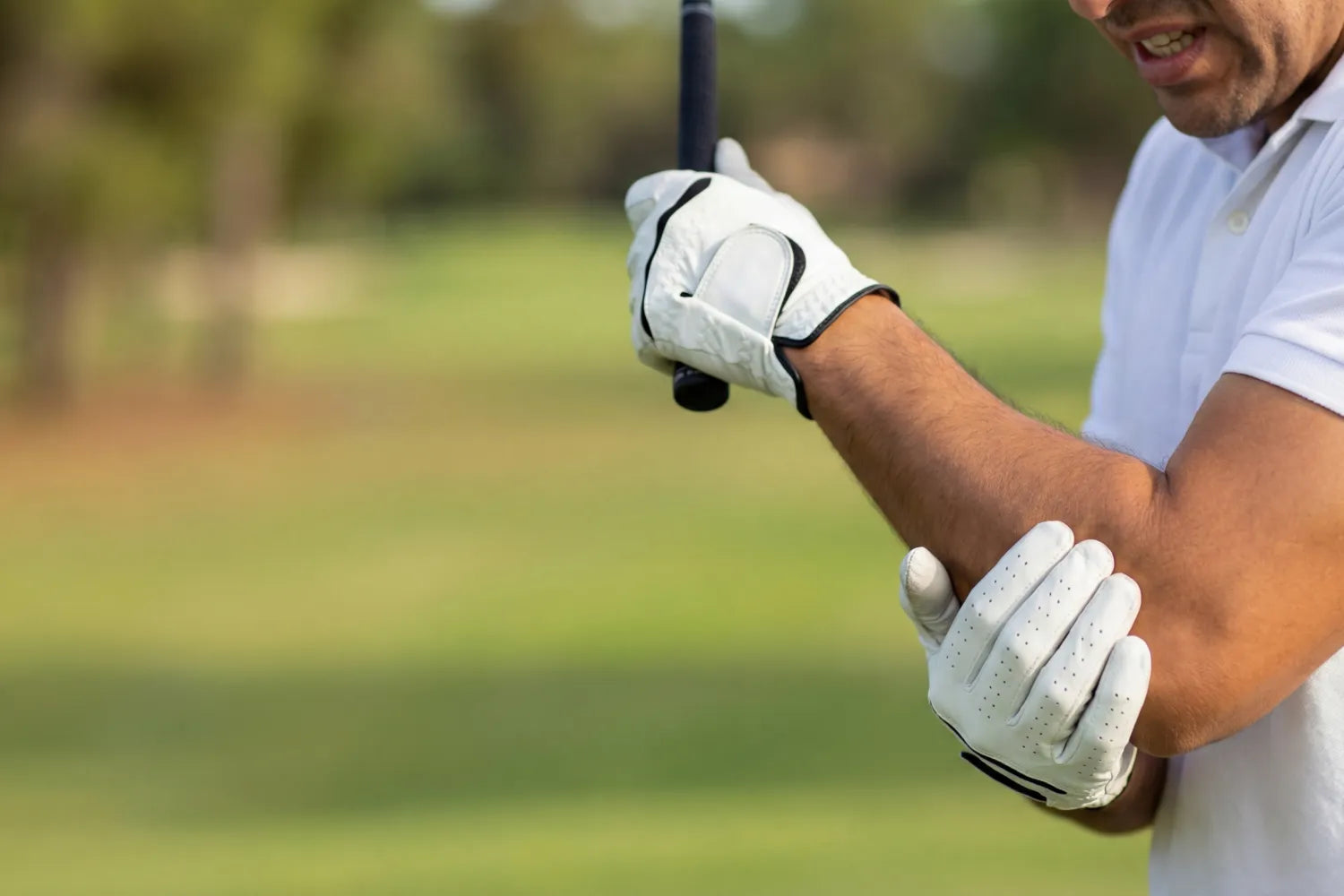
Golfer's elbow, or medial epicondylitis , is the inner-elbow counterpart to tennis elbow. Where tennis elbow affects the outside of the arm, golfer's elbow settles in on the inside, where the forearm muscles responsible for gripping and wrist flexion attach to the bone.
Golfers develop this condition from the repeated stress of swinging a club, but so do baseball pitchers, rock climbers, weightlifters, and construction workers. Anyone who does a lot of gripping, throwing, or forearm-intensive work is a candidate.
Common signs of golfer's elbow include:
- Soreness or tension along the inner elbow that may extend down the forearm
- Stiffness when making a fist or flexing the wrist
- A tingling sensation or weakness that runs toward the ring and pinky fingers
Like tennis elbow, golfer's elbow tends to develop over time rather than from a single incident. The pattern of overuse without adequate recovery is what sets the stage for both conditions.
Tennis Elbow vs. Golfer's Elbow: Key Differences at a Glance
Both conditions involve elbow soreness driven by repetitive motion, but the location of discomfort distinguishes them.
Here's a simple breakdown:
|
Tennis Elbow |
Golfer's Elbow |
|
|
Location |
Outer (lateral) elbow |
Inner (medial) elbow |
|
Tendons affected |
Wrist extensor tendons |
Wrist flexor tendons |
|
Aggravated by |
Gripping, lifting, wrist extension |
Gripping, wrist flexion, throwing |
|
Common in |
Tennis players, painters, desk workers |
Golfers, climbers, pitchers, laborers |
|
Radiates toward |
Back of the forearm |
Inner forearm, ring and pinky fingers |
The bottom line: outer elbow discomfort points to tennis elbow, inner elbow discomfort points to golfer's elbow. If you're unsure which you're experiencing, or if the soreness is severe and persistent, it's always a good idea to check in with a healthcare professional.
Understanding Common Causes and Risk Factors
At their core, both tennis elbow and golfer's elbow are overuse injuries. They develop when repetitive motions put more stress on the tendons than the surrounding muscles can adequately absorb. Over time, that stress leads to microtears, tension, and the soreness that makes everyday tasks feel harder than they should.
Shared risk factors for both golfers and tennis elbow include:
- Repetitive motion without recovery: Performing the same arm or wrist movement repeatedly, especially without rest days, is the most common trigger for both conditions.
- Poor form or technique: In sports and physical labor alike, improper mechanics put excess strain on the elbow and forearm tendons.
- Weak surrounding muscles: When the muscles of the forearm, wrist, and shoulder aren't strong enough to support the demand being placed on them, the tendons take on too much of the load.
- Age: Both conditions are most common in adults between 30 and 50, as tendons naturally become less resilient over time.
- Occupation: Manual laborers, musicians, and office workers with poor ergonomic setups are all at elevated risk, regardless of athletic activity.
Paying attention to how your body is feeling and giving yourself time to recover between intense or repetitive movements is key to feeling your best.
Recovery Tips To Help You Keep Moving
Whether you're dealing with tennis elbow, golfer's elbow, or even just general elbow soreness from overuse, these strategies can help your body do what it's already built to do: heal, adapt, and come back stronger.
Prioritize Active Recovery
The first step is to reduce the activity that's causing the tension, not eliminate movement altogether. Temporarily swap out the aggravating motion and keep the rest of your body moving.
Active recovery, or using low-impact exercises to slightly elevate the heart rate without pushing yourself too hard, has been proven to encourage healthy blood flow. This means more oxygen and nutrients are delivered to your muscles, helping to strengthen and repair the area.
Research suggests active recovery can do more for your muscles and joints than a complete lack of movement.
Stretch Consistently
Gentle stretches like wrist flexors and extensors can help relieve tension in the forearm and take stress off the elbow. Hold each stretch for 20 to 30 seconds and repeat a few times throughout the day. Consistency matters far more than intensity here.
Strengthen the Supporting Muscles
Targeted exercises for the forearm, wrist, and shoulder help distribute load more evenly and reduce strain on the affected tendon. Eccentric exercises, which involve slowly lowering resistance through a range of motion, are particularly effective for tendon recovery.
Use Hot and Cold Therapy Strategically
Cold therapy is best applied within the first 24 to 48 hours of acute soreness or tension, helping to soothe the area and support your body's natural response.
Heat therapy is better suited for tension that's been lingering for more than a day or two, helping loosen stiff tissue and promote mobility. Products designed for both hot and cold use give you that flexibility without the guesswork.
Try a Compression Sleeve
Compression is one of the most practical and versatile tools in any recovery routine. A well-fitting elbow compression sleeve supports healthy circulation , soothes tension around the joint, and provides consistent support whether you're in the middle of a workout or winding down for the evening.
Look for sleeves with a seamless, anti-chafe knit construction so you can wear them comfortably throughout the day without restriction. Moisture-wicking fabric is a bonus for keeping things comfortable during activity.
When To See a Professional
If discomfort persists beyond a few weeks, worsens, or starts interfering with daily tasks, it's time to see a doctor or physical therapist. Getting a professional assessment isn't a step backward. It's part of the right way to recover.
FAQ
Can you have tennis elbow and golfer's elbow at the same time?
It's uncommon but possible, particularly for people whose activities put repetitive stress on both sides of the elbow. If you're experiencing soreness in both the inner and outer elbow simultaneously, it's worth consulting a healthcare professional to get a clear picture of what's going on.
How long does it take to recover from tennis elbow or golfer's elbow?
Recovery timelines vary depending on the severity of the condition and the consistency with which recovery strategies are applied. Mild cases can improve within a few weeks, while more persistent cases may take several months, especially if the aggravating activity continues without modification.
Is it okay to exercise with tennis elbow or golfer's elbow?
In most cases, yes, with modifications. The goal is to avoid movements that directly aggravate the affected tendon while maintaining overall strength and mobility. Low-impact activities that don't stress the elbow can actually support recovery rather than delay it.
What's the difference between a compression sleeve and a brace for elbow discomfort?
A compression sleeve wraps the entire elbow joint and helps support circulation and reduce general tension through consistent, gentle compression. A brace typically targets a more specific area and may offer more structured support for focused discomfort. For everyday use and general recovery support, a compression sleeve is typically the more comfortable and flexible option.
The Bottom Line
Here at Copper Fit , we know what it feels like to be slowed down by soreness that just won't quit. That nagging tension in your elbow that makes you second-guess every grip, swing, and rep. It's frustrating, and you shouldn't have to just push through it or sit it out entirely.
That's why we believe recovery should be just as intentional as training. Whether you're managing tennis elbow, golfer's elbow, or the kind of everyday tension that comes with staying active, the right tools make a real difference.
Our compression sleeves are designed to help support healthy circulation, help soothe tension around the joint, and move with you through every part of your day.
You've put in the work. Keep moving smarter. Your body is built to bounce back, and we're here to help support that every step of the way.
Sources:
Tennis Elbow−Lateral Epicondylitis−Wellness & Treatment | HSS
Golfer's elbow (Medial epicondylitis) - Symptoms and causes | Mayo Clinic
Compression Clothing and Circulation Benefits | UPMC HealthBeat