Key Takeaways
- IT band syndrome is most often caused by weak hip abductors, rapid mileage increases, or worn-out shoes, which means the root causes are almost always addressable with the right training adjustments.
- Exercises like clamshells and single-leg glute bridges target the gluteus medius, the muscle most responsible for protecting your IT band during every run, ride, or hike.
- Recovery follows a four-phase process: reduce irritation, restore mobility, rebuild strength, and return to activity progressively. Compression support like Copper Fit's knee and thigh sleeves can help soothe tension and keep you moving at every stage.
IT band syndrome (ITBS) is an overuse injury that causes discomfort on the outer side of the knee, most often in runners and cyclists. It happens when the iliotibial band becomes irritated. Recovery typically takes 4 to 8 weeks with rest, stretching, foam rolling, and hip strengthening.
If that timeline feels discouraging, take a breath. ITBS is one of the most common running injuries, and the good news is that most people make a full return to training.
What Is IT Band Syndrome?
The iliotibial band (IT band) is a thick, fibrous band of connective tissue that runs from the iliac crest at your hip, down the outside of your thigh, and attaches just below the knee at the tibia. It's not a muscle, which means you can't strengthen it directly, but it works closely with the muscles around it, especially the glutes and hip abductors.
IT band syndrome develops when the IT band becomes irritated as it repeatedly slides over the lateral femoral epicondyle, the bony prominence on the outside of your knee. Every time your knee flexes and extends, the IT band crosses that point. Do that thousands of times in a single workout with the wrong mechanics or too much volume, and you've got a recipe for irritation.
ITBS is especially common in runners, cyclists, hikers, and military personnel. It's also one of the leading causes of lateral knee discomfort in endurance athletes. If the outside of your knee has been giving you grief lately, there's a good chance your IT band is at the root of it.
What Causes IT Band Syndrome?
Here's the thing about ITBS: it's almost always a training error rather than a structural flaw. The body is remarkably adaptable, so it just needs time and the right load.
Most cases of IT band syndrome come down to one or more of these five root causes:
-
Weak hip abductors (gluteus medius) — When your gluteus medius isn't doing its job, your pelvis drops with every stride, increasing tension on the IT band. This is the number one biomechanical culprit.
-
Increasing mileage too quickly — Jumping your weekly volume too fast doesn't give your connective tissue time to adapt. When it comes to building endurance, small and gradual increases will do you more good in the long run.
-
Running on cambered surfaces — Roads that slope toward the curb force one leg into a lower position repeatedly, creating uneven stress on the outer knee.
-
Worn-out shoes — Old running shoes lose cushioning and stability in ways that aren't always visible. Once the support breaks down, your mechanics can suffer.
-
Leg-length discrepancies — Even a small anatomical difference in leg length can alter your gait enough to put excess load on the IT band over time.
The encouraging takeaway is that almost all of these are fixable. A few smart adjustments to your training, footwear, and strength routine can make a massive difference.
How To Identify IT Band Syndrome
When it comes to ITBS, once you know what you're looking for, it's harder to miss.
Here are the most common symptoms:
- Sharp or burning discomfort on the outer knee — often described as a stinging sensation right at or just above the lateral knee.
- Discomfort that worsens with downhill running — the increased knee flexion angle on descents is particularly aggravating for the IT band.
- Pain that flares at a specific mileage point — this is one of the most telling signs. Many runners notice discomfort kicks in at almost exactly the same point every run (e.g., 2–3 miles in), then fades after stopping, only to return at the same spot next time.
- Tenderness when pressing on the outer knee — particularly about 2 cm above the joint line, at the lateral femoral epicondyle.
- A clicking or snapping sensation over the outer knee — caused by the IT band moving back and forth across the bony landmark.
If you’re a runner experiencing knee discomfort, take note of when and where the discomfort occurs. If there is a predictable mile marker at which outer knee discomfort kicks in (like the second or third mile every time), this is a strong indicator that you're dealing with IT band irritation rather than another knee issue.
Best Stretches for IT Band Syndrome
Let's be clear upfront: stretching alone won't fix IT band syndrome. The IT band itself has very limited flexibility and is built to be taut. Real, lasting recovery means addressing hip weakness, not just chasing the tightness. That said, mobility work is an important part of the process.
Here are five moves that belong in your recovery toolkit:
1. Standing IT Band Stretch: Cross your right leg behind your left and lean your torso to the left, reaching your right arm overhead. Hold 30 seconds per side, 2–3 rounds.
2. Pigeon Pose: From a plank position, bring your right knee toward your right wrist and extend the left leg behind you. Square your hips and hold 45–60 seconds per side, 2 rounds.
3. Foam Rolling the Outer Thigh: Place the foam roller under your outer thigh and roll slowly from the hip to just above the knee. Pause on tender spots for 10–20 seconds. Spend 60–90 seconds per leg. Do this daily if you can.
4. Side-Lying Clamshells: For this strengthening exercise, lie on your side with knees bent at 90° with your feet stacked. Keeping your feet together, raise your top knee as high as you can without rotating the pelvis. Three sets of 15–20 reps per side.
5. Single-Leg Glute Bridges: Lie on your back with knees bent. Extend one leg, then press through the heel of the other to lift your hips into a bridge. Hold 2 seconds at the top. Three sets of 12 reps per side.
Hip strengthening exercises like clamshells and glute bridges are the foundation of prevention. Make them a habit for the best results.
How To Recover From IT Band Syndrome
Recovery from ITBS works best when you treat it as an intentional four-phase process.
Phase 1
Reduce Irritation (Weeks 1–2): Step back from running and other activities that trigger discomfort. Apply ice to the outer knee for 15–20 minutes, 2–3 times daily during the first 48–72 hours. Compression is your friend here.
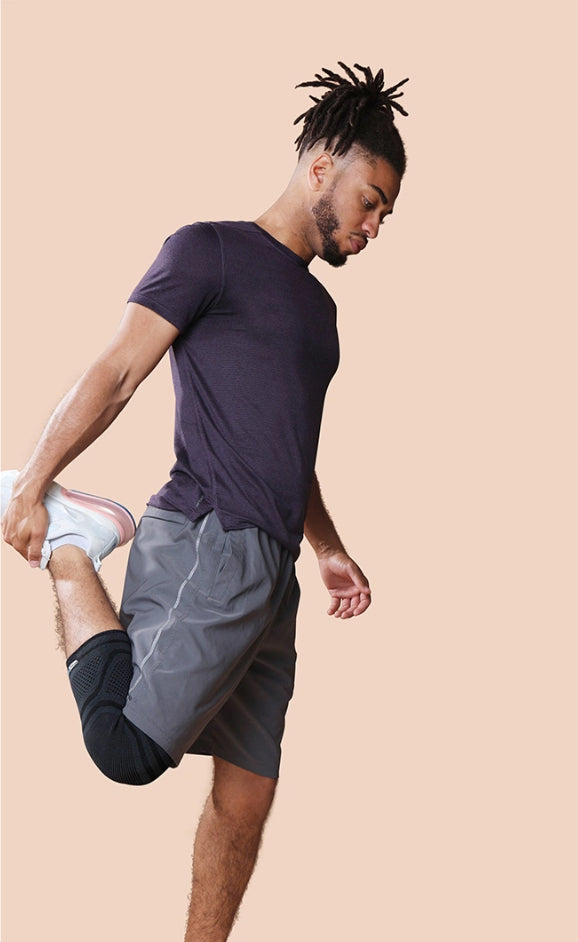
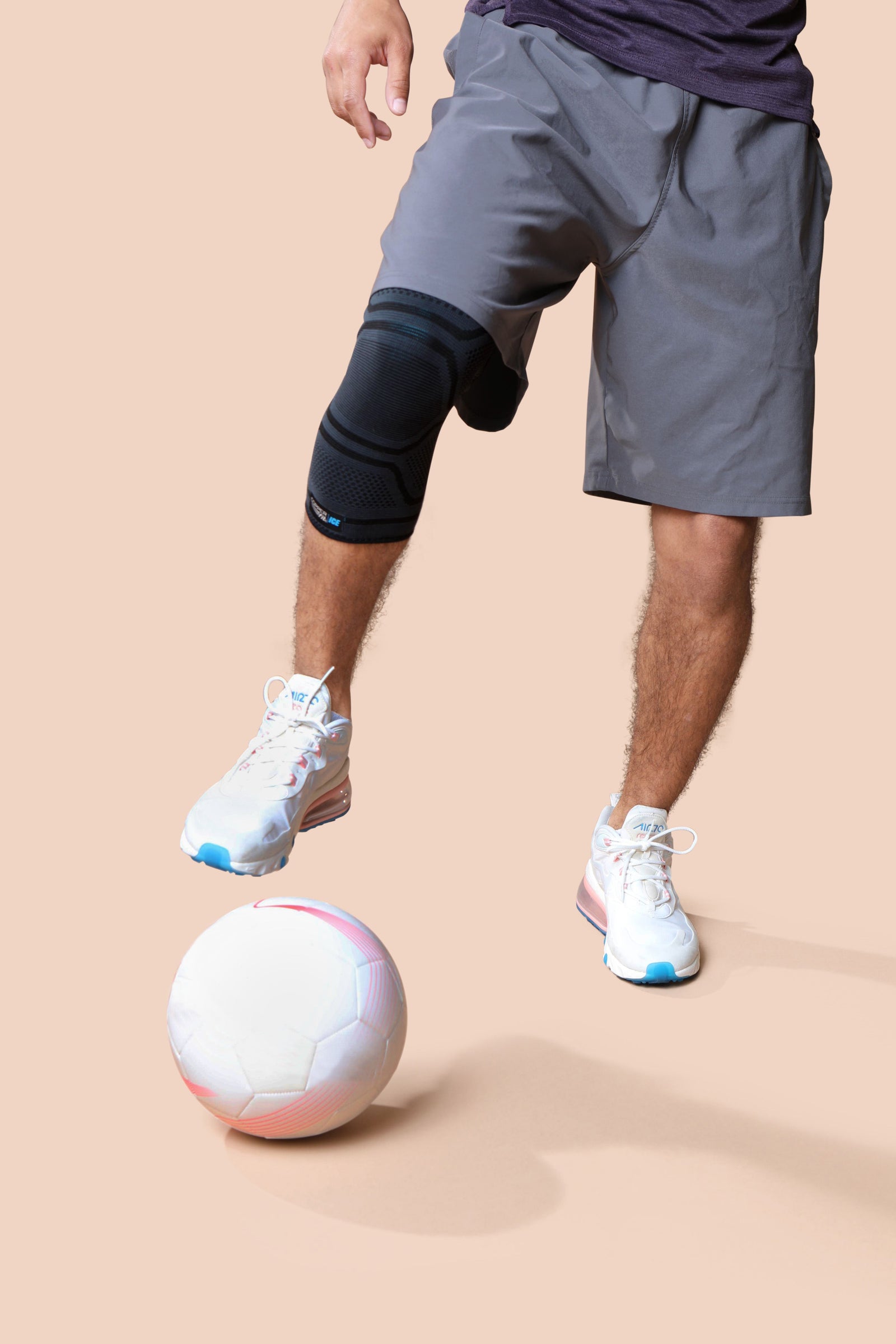
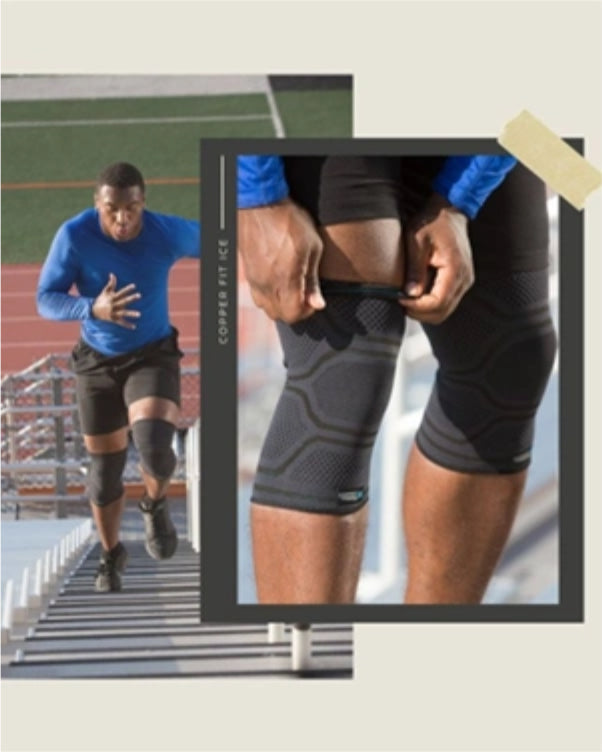
Our compression knee sleeves are designed to deliver targeted support right where you need it. The contoured fit cradles the outer knee, and the copper-infused, moisture-wicking fabric keeps things breathable during rest days and light PT sessions alike. They're machine-washable, have 4-way stretch, and are built to move with you.
Phase 2
Restore Mobility (Weeks 2–3): Introduce foam rolling daily and add dynamic stretching before any activity. Pigeon pose, leg swings, and hip circles are all great here. Keep compression support in place during movement to help soothe tension and support healthy circulation as your body does its work.
Phase 3
Rebuild Hip Strength (Weeks 3–5): This is where you actually fix the problem. Clamshells, monster walks, lateral band walks, and single-leg squats target the gluteus medius and hip abductors, which are the muscles that were failing to protect your IT band in the first place. Aim for 3 sessions per week.
Phase 4
Progressive Return to Running (Weeks 5–8): Start at 50% of your pre-injury volume and increase by no more than 10% per week. Keep your Copper Fit sleeve in rotation during early runs, as the gentle compression helps support muscle recovery and keeps you tuned into how your knee is feeling.
How To Prevent IT Band Syndrome From Coming Back
Getting back to running is great. Staying there is the real win.
Here's how to keep ITBS from making a comeback:
-
Build hip strength 2–3x per week — the gluteus medius needs consistent maintenance, not just rehab attention. Make clamshells and bridges a permanent part of your routine.
-
Follow the 10% mileage rule — never increase your weekly running volume by more than 10% from one week to the next.
-
Replace running shoes every 300–500 miles — worn-out midsoles are invisible saboteurs. Track your mileage and refresh your shoes on schedule.
-
Vary your terrain — if you always run on the same cambered road, your IT band is always absorbing stress from the same angle. Mix in trails, tracks, or flat paths.
One note on cross-training: cycling is often recommended as a low-impact alternative during ITBS recovery, but the repetitive knee flexion can sometimes aggravate symptoms. Keep cadence high and resistance low, and stop if the discomfort flares up.
Frequently Asked Questions
What does IT band syndrome feel like?
ITBS typically feels like a sharp, burning, or stinging sensation on the outer side of the knee. It often appears at a consistent point during a run and may ease up after stopping and return when activity resumes.
How long does it take to recover from IT band syndrome?
Most cases of ITBS resolve within 4 to 8 weeks with proper rest, foam rolling, stretching, and hip strengthening. More severe or long-ignored cases can take longer, especially if training continues through symptoms.
Can I run with IT band syndrome?
Running through active ITBS usually prolongs recovery. It's best to take 1–2 weeks off from running, address the root causes, and return gradually once discomfort has resolved and hip strength has improved.
Are knee sleeves good for IT band syndrome?
Yes, compression sleeves can help support the area, help soothe tension, and promote healthy circulation during recovery and return-to-activity phases. Look for a contoured, breathable sleeve with targeted compression at the outer knee.
Sources:
The Iliotibial Band: A Complex Structure with Versatile Functions | PMC
Iliotibial Band Syndrome (ITBS): Causes, Symptoms & Treatment | Cleveland Clinic