Key Takeaways
-
Compression socks may help support circulation and reduce blood pooling in the legs.
-
Graduated compression is commonly used to support venous return.
-
They are often part of a broader, provider-guided POTS management plan.
Postural Orthostatic Tachycardia Syndrome (POTS) is a form of dysautonomia that causes a rapid increase in heart rate when moving from lying down to standing. It can lead to symptoms like dizziness, fatigue, and discomfort that affect daily life.
Managing POTS often requires a combination of strategies, including lifestyle adjustments and supportive tools. One commonly recommended non-pharmacological option is compression socks. But do they actually help?
Let’s take a closer look at how they may support people with POTS.
What Is POTS, and Why Does Blood Pooling Matter?
POTS affects how the autonomic nervous system regulates blood flow. When someone with POTS stands up, blood can pool in the lower extremities instead of circulating efficiently back to the heart.
This pooling may reduce venous return, which can trigger the body to compensate by increasing heart rate. As a result, people may experience lightheadedness, fatigue, or discomfort.
Compression socks are often discussed as a way to help manage these symptoms. By applying pressure to the legs, they may help soothe swelling and support consistent blood flow, which can feel supportive during daily activities.
How Compression Socks May Help With POTS Symptoms
Compression socks work by applying graduated pressure, meaning they are tightest at the ankle and gradually loosen up the leg. This design helps encourage blood to move upward rather than pooling in the lower legs.
Compression garments may help manage symptoms in some individuals with POTS. While results vary, this supports their use as part of a broader management approach.
Many clinical discussions reference 20–30 mmHg as a commonly used compression level for supporting circulation. In some cases, higher levels may be considered under medical guidance.
If you’re new to compression, learning more about how compression socks work can help you better understand their role in circulation and support.
Tips for Using Compression Socks With POTS
If you’re considering compression socks for POTS, using them correctly can make a noticeable difference in comfort and effectiveness.
-
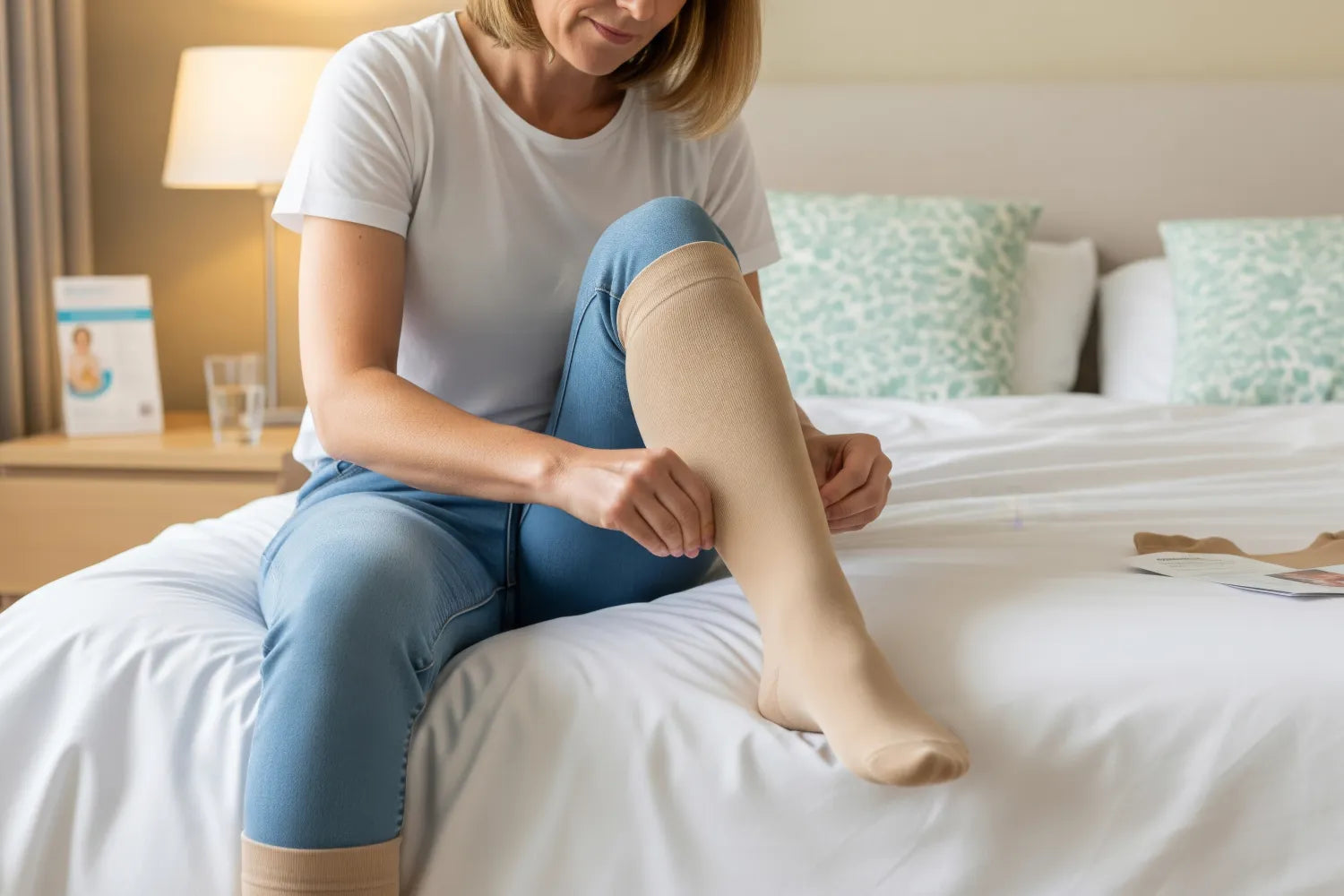
Put them on before getting out of bed: This can help prevent blood from pooling as soon as you stand.
-
Choose the right fit and compression level: Proper sizing is essential for both comfort and effectiveness.
-
Consider additional support options: Some people benefit from compression tights or abdominal binders alongside socks.
-
Pair with lifestyle strategies: Hydration, increased salt intake, and elevating the head of your bed may also be recommended by your provider.
FAQ
Do compression socks actually help with POTS symptoms?
Compression socks may help soothe swelling and blood pooling, supporting circulation when used alongside other strategies like hydration and movement.
What compression strength is best for POTS?
Many people start with 20–30 mmHg, though higher levels may be recommended by a healthcare provider for more severe symptoms.
How and when should compression socks be worn for optimal benefit?
It’s best to put them on in the morning before standing, wear them during the day, and remove them at night.
Are there risks or contraindications associated with compression sock use?
Most people use them safely, but those with certain vascular conditions or skin concerns should consult a healthcare provider first.
Sources: